✦ AI-generated review
The Geometry of Indifference
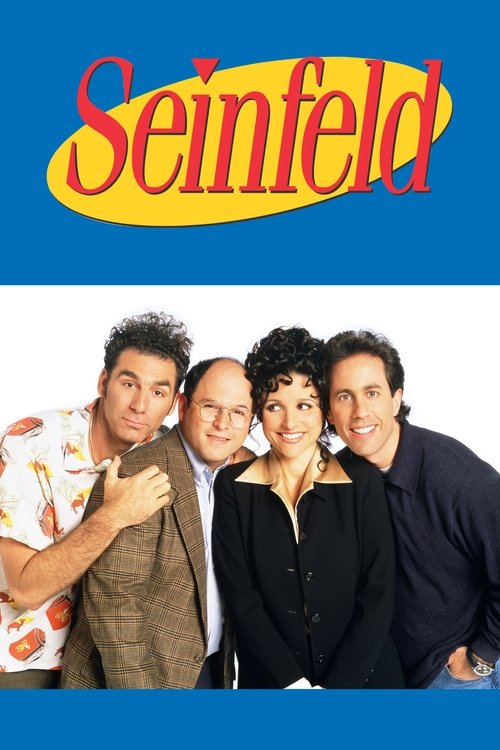
It has been dismissively, and famously, labeled a "show about nothing." Yet, to revisit *Seinfeld* decades after its premiere is to realize that this label was never a description of its plot, but a diagnosis of its soul. In the warm, moralizing landscape of American television—where families usually hugged out their problems in twenty-two minutes—Jerry Seinfeld and Larry David constructed a cold, hermetic universe governed by a single, terrifying law: No hugging, no learning. *Seinfeld* was not a vacuum; it was a mirror reflecting the exhaustion of the social contract.
To watch *Seinfeld* now is to witness the architectural dismantling of polite society. The director’s lens does not romanticize New York City; this is not the fairy-tale metropolis of *Friends* or *Sex and the City*. Instead, the camera settles into the beige stagnation of Jerry’s apartment and the fluorescent purgatory of Monk’s Café. The visual language is deliberately flat, trapping the characters in a recursive loop of triviality. This aesthetic reaches its zenith in the seminal episode "The Chinese Restaurant." Here, the camera creates a sense of claustrophobia that is almost Beckettian. There is no B-plot, no escape, just three people standing in a lobby, waiting for a table that never comes. It is a masterclass in tension, proving that the highest stakes in modern life are not life-or-death, but the silent, screaming frustration of being ignored by a maître d’.
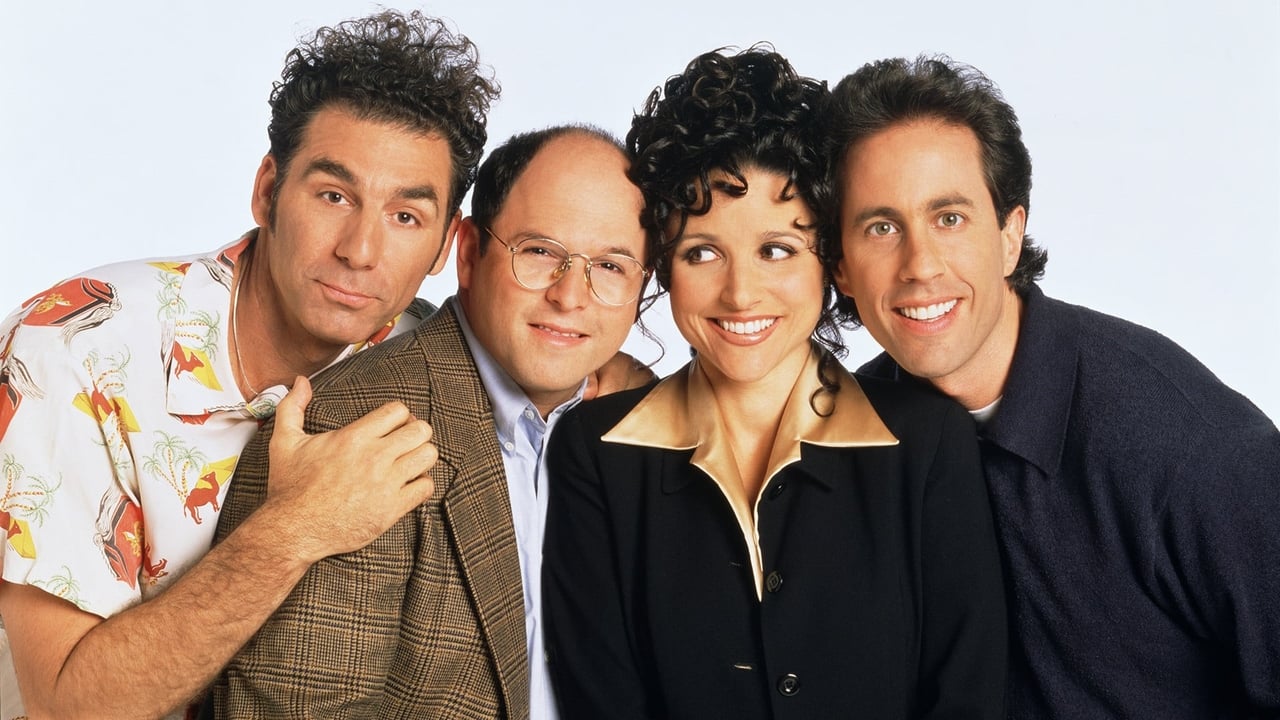
At the center of this mechanism are four characters who function less as friends and more as co-conspirators in narcissism. They are the id of the American 1990s—obsessed with the self, paralyzed by choice, and utterly devoid of empathy. While Jerry is the observational anchor, it is George Costanza (played with Shakespearean neurosis by Jason Alexander) who serves as the show’s philosophical core. George is a man raging against the dying of the light, but the light is usually just a good parking spot or a comfortable bathroom. When he screams, "We’re living in a society!" it is the cry of a man who understands the rules only well enough to exploit them. He is the darkest reflection of our own inner monologues, the part of us that counts the seconds during a conversation, waiting for it to end.
The series is often funny, yes, but the laughter it solicits is specific—it is the laughter of recognition, the sound we make when we realize our own pettiness has been exposed. The narrative structures of the episodes are not merely comedic; they are interlocking puzzles of cause and effect where a casual misdeed in the first act inevitably destroys a life in the third. This is karma, weaponized.
Ultimately, *Seinfeld* remains a radical text because it refused to redeem its characters. The controversial finale, which saw the quartet imprisoned for violating a "Good Samaritan" law, was rejected by audiences at the time because it shattered the illusion of consequence-free living. But retrospectively, it was the only honest ending available. The show argued that if you strip away the sentimentality of human connection, what remains is not "nothing." What remains is a group of people in a cell, talking about the placement of a button on a shirt, indifferent to the end of the world. It was the first true anti-hero saga, paving the road for the darker, more cynical television that would follow, reminding us that sometimes, hell is other people—especially the ones you eat lunch with every day.