The Architecture of DesireThere is a specific, heavy gravity to the Brazilian *telenovela*. It is a genre often dismissed as melodramatic confection, yet at its best, it serves as a nation’s subconscious—a place where class, race, and sexuality collide in operatic fashion. With HBO Max’s *Madam Beja* (known domestically as *Dona Beja*), director Hugo de Sousa attempts something ambitious: to take a foundational myth of Brazilian television, stripping away the male gaze that defined its 1986 predecessor, and rebuilding it as a prestige tragedy. The result is a series that feels less like a soap opera and more like a lush, suffocating fever dream about the cost of freedom in a slave-holding society.
The story of Ana Jacinta de São José, the legendary courtesan of Araxá, has always been a tale of transformation—from innocent maiden to the "witch" who seduced a town. But where the 80s version leaned into titillation, this 2026 reimagining leans into power. We are not watching a woman fall from grace; we are watching a woman construct a fortress.
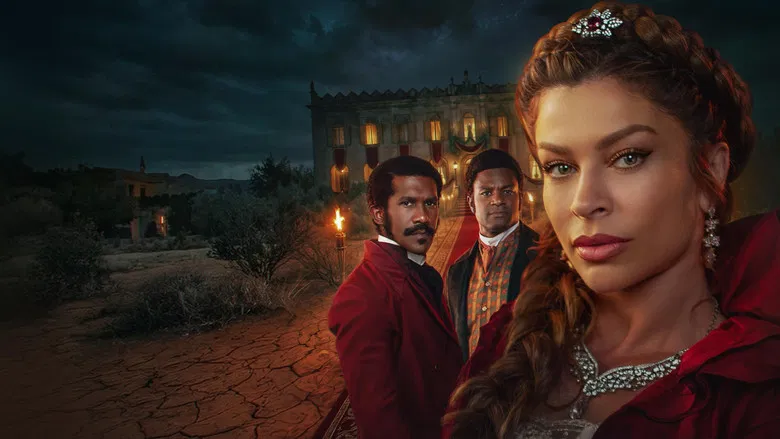
Visually, De Sousa has abandoned the dusty, sun-bleached flatness typical of the genre’s past. Instead, *Madam Beja* is bathed in a chiaroscuro that recalls the oil paintings of the era it depicts. The landscape of Minas Gerais is rendered not just as a backdrop, but as a character—verdant, isolating, and hostile. The camera lingers on the textures of the period: the lace that constricts, the mud that stains, and the jewelry that serves as armor.
This visual language is crucial because it underscores the series' central thesis: beauty, for Beja, is not a gift. It is a weapon, honed by trauma. The cinematography emphasizes the claustrophobia of Araxá’s conservative society, framing the interiors of the "respectable" houses as dark and tomb-like, contrasting sharply with the vibrant, almost violent color palette of Beja’s establishment, the Chácara do Jatobá.

At the storm's center is Grazi Massafera. Stepping into a role that defined a generation is a thankless task, yet Massafera brings a weary, jagged edge to Beja that feels entirely modern. Her performance is devoid of camp. When she stares down the hypocritical matriarchs of the town, there is no wink to the audience; there is only the cold rage of a survivor.
Crucially, the script modernizes the narrative by complicating the racial dynamics of the 19th century. The casting of David Junior and André Luiz Miranda injects a necessary layer of tension regarding race and privilege that was largely glossed over in previous iterations. The romance here is not a fairytale; it is burdened by the social hierarchies of the time. The chemistry between Massafera and Junior simmers with things unsaid—a recognition that both are outcasts in a world designed to crush them, albeit in different ways.

If the series falters, it is perhaps in its pacing, which occasionally drags under the weight of its own prestige aspirations. There are moments where the silence stretches too thin, where the longing looks linger a beat too long. However, this sluggishness also allows the tragedy to breathe. We are forced to sit with the characters in their discomfort.
Ultimately, *Madam Beja* is a triumph of revisionist history. It refuses to treat its protagonist as a scandalous footnote or a sexual object. Instead, it presents her as a proto-feminist capitalist, a woman who understood that in a world where men buy and sell everything, the only way to survive is to become the merchant of one's own destiny. It is a dense, intoxicating watch that proves the melodrama, when handled with artful intent, is the perfect vessel for exploring the human condition.