✦ AI-generated review
The Afterlife is a Classroom
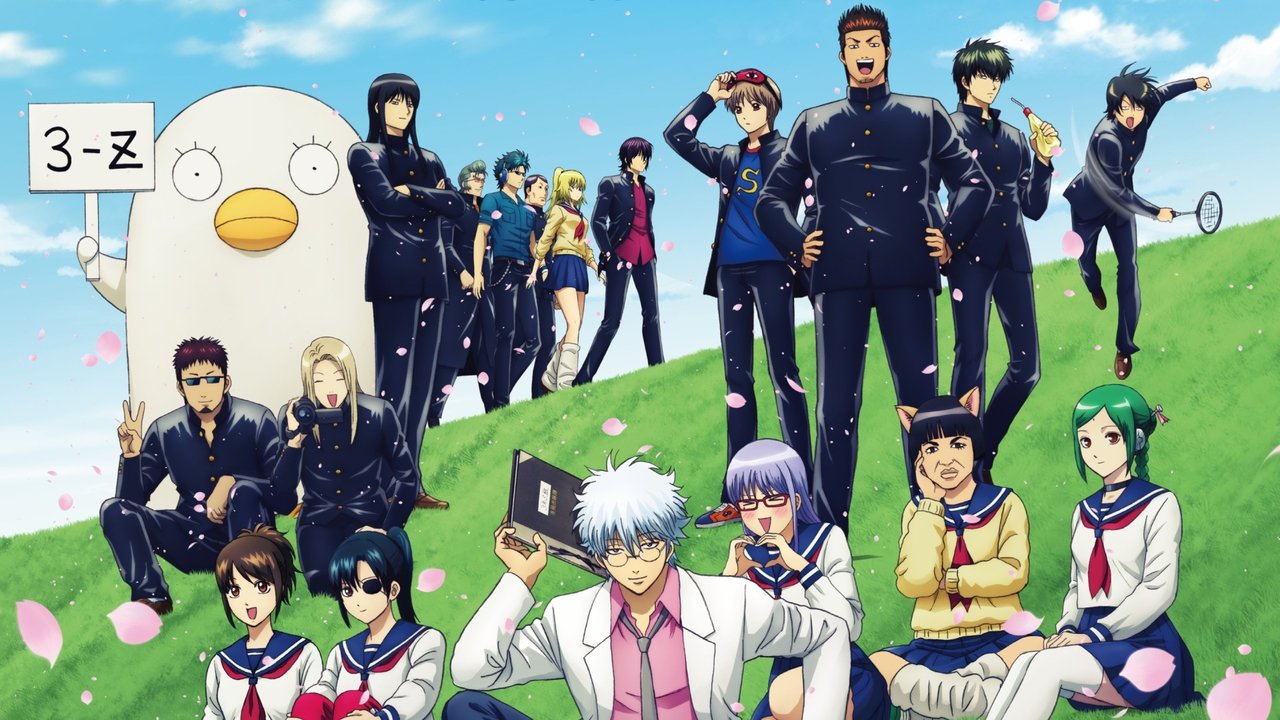
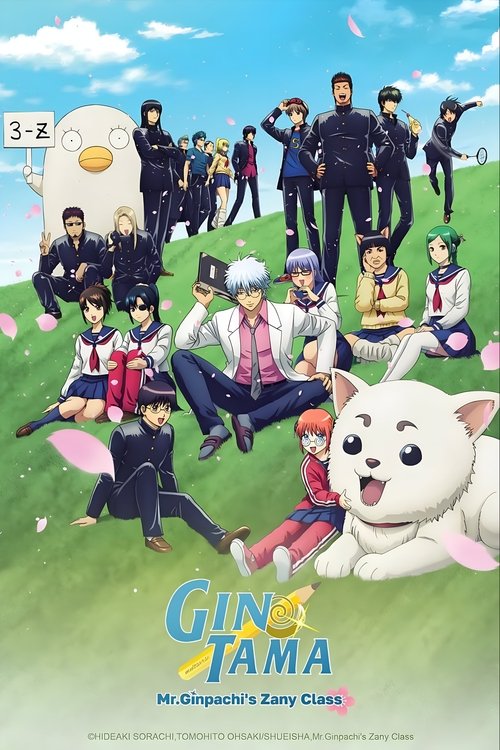
In the lifecycle of successful anime franchises, the "School Alternate Universe" is usually a desperate gasp for relevance—a cynical attempt to repackage battle-hardened warriors into marketable high school archetypes to sell clear files and keychains. It is where nuance goes to die. Yet, *Gintama - Mr. Ginpachi's Zany Class* (2025) enters this tired genre not to inhabit it, but to burn it down from the inside. Adapted from the long-running light novels and arriving years after the main series concluded its epic run, this 12-episode experiment feels less like a spin-off and more like a fever dream experienced by the collective consciousness of its fanbase.
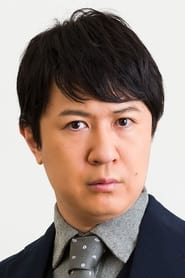
The genius of *Gintama* has always been its ability to weaponize apathy, and nowhere is this more potent than in the figure of Ginpachi-sensei himself. Voiced by the incomparable Tomokazu Sugita, Ginpachi is a teacher only in the loosest legal definition. With his trademark dead-fish eyes and a "cigarette" that the show insists (with aggressive meta-textual winking) is merely a lollipop, he presides over Class 3-Z like a weary gatekeeper of purgatory. Sugita’s performance here is a masterclass in minimalism; he strips away the samurai valor of Gintoki Sakata, leaving only the sarcasm and the exhaustion. He anchors the chaos not by controlling it, but by being too lazy to stop it.
Visually, the series retains the frantic, slapdash aesthetic that the franchise wears as a badge of honor. The directors understand that the comedy lives in the sudden shifts from low-budget static frames to hyper-detailed absurdity. A standout example occurs in the mid-season "World Tournament" episode. Here, the show brazenly parodies *Dragon Ball* by introducing a character blatantly modeled on King Chappa, only to bury him under censorship bars and bleeps. It is a visual assault that serves a dual purpose: it skirts copyright law while simultaneously mocking the industry's reliance on nostalgia. The censorship bar isn't just a gag; it’s a texture, a constant reminder that we are watching a simulation of a show that is barely holding itself together.
Critically, one must address the friction of the early episodes. By transposing complex characters like Kagura or Hijikata into student roles, the script risks flattening them into caricatures—the "glutton," the "disciplinarian." However, as the semester progresses, this flattening reveals itself to be the point. The school setting strips away the heavy political drama and sci-fi tragedy of the original *Gintama* run, leaving only the raw, dysfunctional relationships between the cast. We aren't watching them save Edo from aliens anymore; we are watching them survive a math test. In doing so, the show argues that their bond is durable enough to survive any genre shift.
*Mr. Ginpachi's Zany Class* is not a starting point for the uninitiated; it is a victory lap for the faithful. It lacks the emotional devastating highs of the *Gintama* theatrical finales, but it replaces them with a comforting, nihilistic warmth. It suggests that even after the wars are fought and the story is "over," these idiots are destined to be together in a classroom at the end of the universe, arguing over nothing, forever.