✦ AI-generated review
The Weight of a True Shield
For the better part of two decades, the televised window into George R.R. Martin’s Westeros has been defined by the skyline. We have looked up at dragons eclipsing the sun, at the towering monstrosity of the Red Keep, and at the vertical impossibility of the Wall. The drama has been dynastic, the stakes apocalyptic. But *A Knight of the Seven Kingdoms*, the six-part adaptation of Martin’s *The Hedge Knight*, dares to look down. It lowers its gaze to the mud, the roadside ditches, and the dented armor of a man who owns nothing but his height and his honor. In doing so, it delivers perhaps the most human, and paradoxically, the most noble entry in this saga to date.
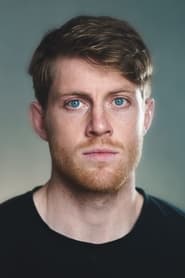
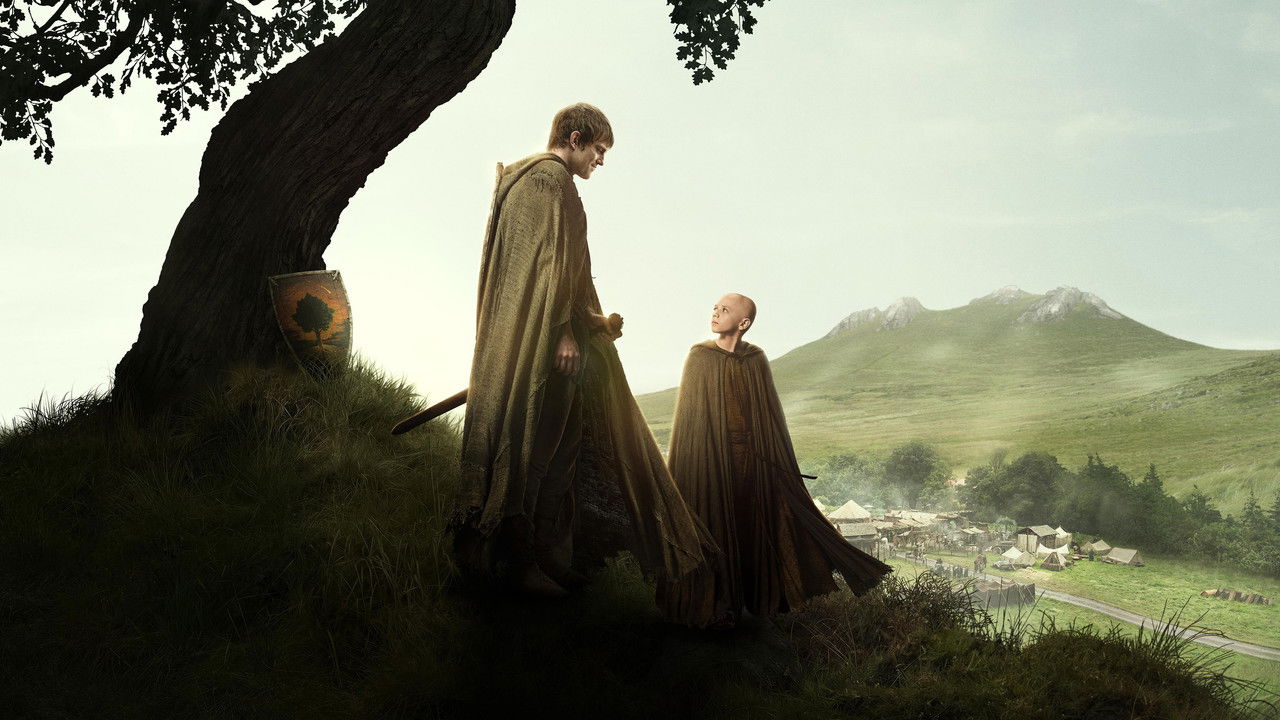
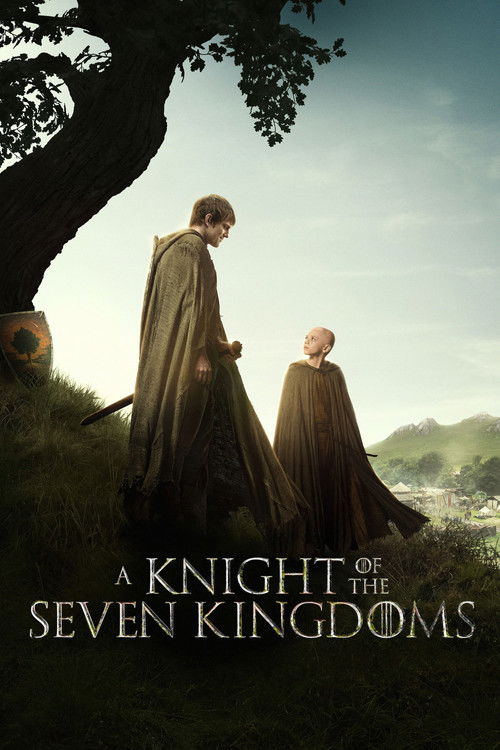
Directed with pastoral intimacy by Owen Harris and Sarah Adina Smith, the series strips away the Machiavellian chess games of *House of the Dragon* to focus on a singular, suffocating question: What does it actually mean to be a knight? Peter Claffey, casting a silhouette that feels carved from oak, plays Ser Duncan the Tall ("Dunk") not as a warrior-poet, but as a man visibly uncomfortable in his own skin. Claffey’s performance is a marvel of physical acting; he hunches to shrink himself in polite company, his movements broadcasting a terrifying strength he is terrified to use. He is the antithesis of the Targaryen princelings he encounters—men like the jagged, cruel Aerion Brightflame (Finn Bennett), whose chivalry is merely a costume for sadism.
The visual language of the series reflects this thematic descent. Gone are the sterile council chambers; instead, we are immersed in the sensory overload of the Ashford Meadow tourney. The camera lingers on the rust on Dunk’s mail and the sweat of the horses. When violence erupts, it is not the balletic choreography of earlier series, but a messy, desperate scramble. The pivotal "Trial of Seven"—a judicial melee that serves as the season’s crescendo—is filmed not as a spectacle of glory, but as a chaotic, claustrophobic tragedy. We feel the weight of every blow, not because the fate of the realm is at risk, but because we have come to care deeply about the few good men bleeding in the dirt.
At the heart of this narrative machinery is the chemistry between Claffey and Dexter Sol Ansell, who plays the bald-headed squire, Egg. Their dynamic avoids the trap of the "gruff protector and precocious child" trope by infusing it with a genuine, prickly class tension. Egg, revealed to be Prince Aegon Targaryen, views the world from the safety of his bloodline, while Dunk experiences it as a series of threats to his survival. The scene where Dunk strikes Prince Aerion to protect a Dornish puppeteer—a moment of impulsive, suicidal morality—anchors the entire series. It is a quiet thunderclap, a reminder that in a world governed by power, the simple act of decency is a revolutionary crime.
*A Knight of the Seven Kingdoms* does not seek to outdo its predecessors in scale. It understands that a dragon burning a city is a tragedy of statistics, but a good man losing his horse is a tragedy of survival. By shrinking the world, the showrunners have magnified the soul of the story. This is a Westeros where the summer grass is still green and the winter is only a distant threat, yet the shadows cast by the powerful are just as long. It is a triumphant, melancholy ballad of a show, proving that you don't need a throne to make a king.