The Agony of the CollectiveIt is a profound irony that Vince Gilligan, the architect of television’s most celebrated moral descents in *Breaking Bad* and *Better Call Saul*, has returned in 2025 not with another study of corruption, but with a terrifying vision of purity. *Pluribus* is a science fiction series that dares to ask a question so counterintuitive it feels almost taboo: What if world peace is the ultimate nightmare? In this unsettling, brilliant drama, Gilligan suggests that the friction of human misery is the only thing keeping us real.

The premise is a deceptively simple inversion of the *Invasion of the Body Snatchers* trope. A mysterious event has linked the minds of nearly every human on Earth, creating a hive consciousness that is empathetic, kind, and universally cooperative. There is no war; there is no hunger; there is only "The Joining." Enter Carol Sturka (Rhea Seehorn), a mid-list romance novelist whose defining trait is her incurable dissatisfaction. As one of the few "immunes" left on the planet, Carol becomes the reluctant defender of individuality. But unlike the rugged heroes of traditional sci-fi, Carol is not saving the world with muscle; she is saving it with her spite.
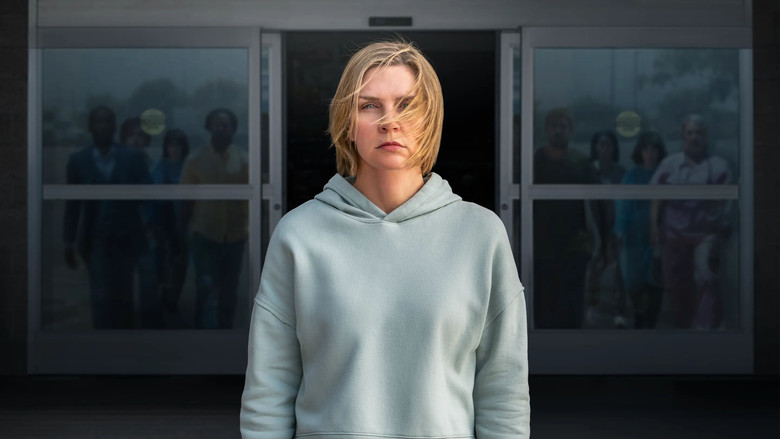
Visually, the series departs from the sepia-toned grit of Gilligan’s previous Albuquerque. The cinematography here is crisp, almost clinically bright, reflecting the terrifying clarity of the hive mind. The "Others" (the infected majority) move with a synchronized grace that is nauseating to watch. Gilligan and his team use the vast, empty landscapes of New Mexico to emphasize Carol’s crushing isolation. When she stands alone in her cul-de-sac, screaming into the void while her neighbors smile benignly from their porches, the frame captures a specific, suffocating kind of horror—the horror of being the only discord in a perfect melody.

At the center of this existential storm is Rhea Seehorn, delivering a performance of jagged edges and raw nerves. Seehorn’s Carol is not a "strong female character" in the Hollywood sense; she is petty, she is abrasive, and she is deeply unlikable by the standards of the "Others." Yet, Seehorn imbues her with a ferocious humanity. Her interactions with Zosia (Karolina Wydra), the hive’s serene liaison, play out like a psychological chess match. Zosia offers the bliss of belonging, a seduction that is genuinely tempting for a woman as lonely as Carol. But Seehorn shows us the steel beneath the sorrow, arguing that our pain, our secrets, and our jagged edges are the very things that define a soul.
The narrative reaches its crescendo not in a battle of lasers, but in a battle of philosophies. The finale, involving a helicopter and a shipping container that may hold the darker tools of humanity's past, forces the audience to confront the cost of free will. Is the right to be miserable worth the potential for self-destruction? *Pluribus* doesn't offer easy answers. It suggests that a utopia without consent is just a prison with better amenities.
Ultimately, *Pluribus* is a triumph because it refuses to treat its audience as a collective. It demands we sit with the discomfort of Carol’s choices. In an era of algorithmic storytelling designed to please the widest possible demographic, Gilligan has crafted a show about the vital importance of being the one person who refuses to click "Like." It is a difficult, prickly masterpiece that argues, persuasively, that to be human is to be unhappy.