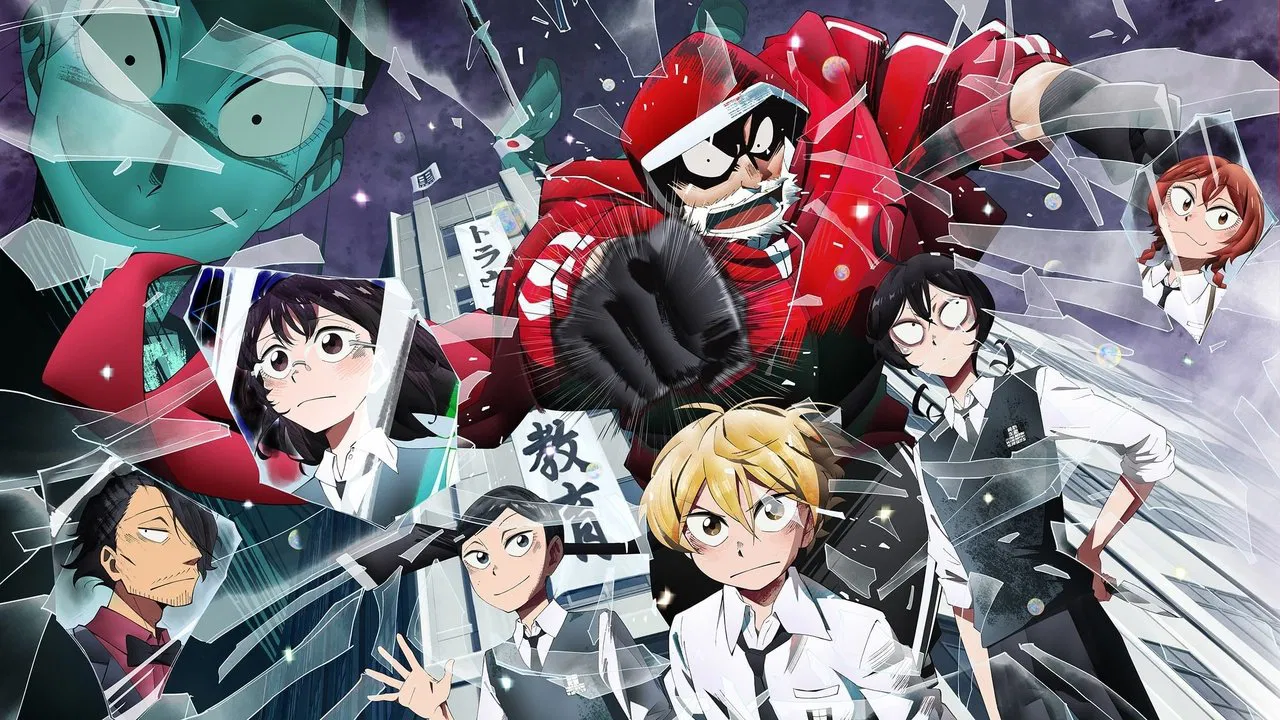
The Red Curse of AdulthoodIn the sanitized, near-future Japan of *SANDA*, childhood is not a stage of life but a state-mandated religion. In a society collapsing under the weight of plummeting birthrates, the few remaining children are fetishized, preserved, and suffocated by a "trauma-free" curriculum that forbids them from sleeping, lest they grow up too fast. Into this sterile dystopia steps Paru Itagaki’s peculiar imagination, adapted with kinetic frenzy by Science SARU. If Itagaki’s previous work, *Beastars*, used anthropomorphism to explore the savage undercurrents of desire, *SANDA* uses the grotesque mythology of Santa Claus to weaponize the awkward, bone-cracking transition into adulthood.
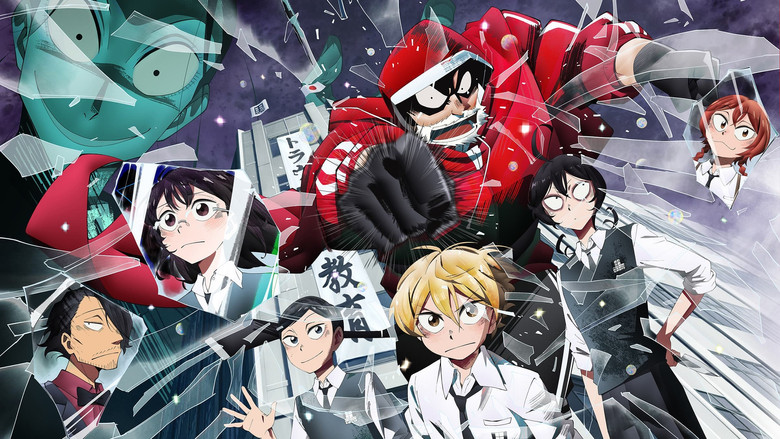
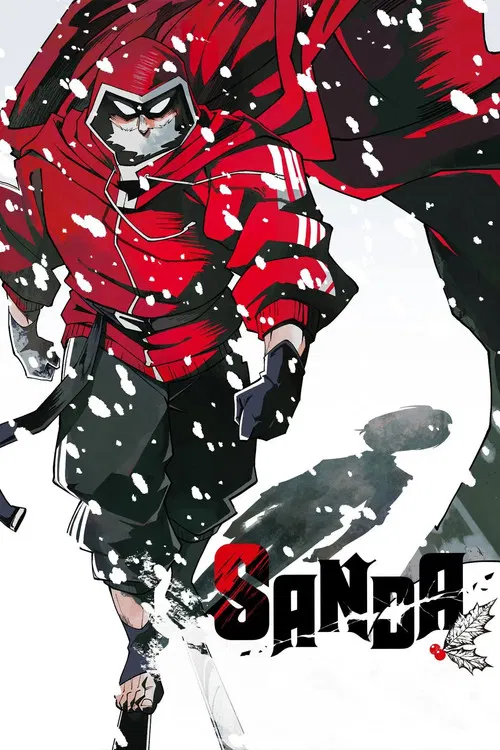
The series, directed by Tomohisa Shimoyama, visually oscillates between the clinical and the visceral. Science SARU’s signature elasticity is on full display here, but it feels heavier, more tactile than the psychedelic loops of *Devilman Crybaby*. The world of 2080 is rendered in soft, harmless pastels—a nursery for teenagers—until the violence erupts. When the protagonist, Kazushige Sanda, transforms, the animation shifts gears. His metamorphosis from a diminutive middle schooler into a hulking, bearded Santa Claus is not a magical girl sparkle-sequence but a cronenbergian expansion of flesh and muscle. The sound design emphasizes the stretching of skin and the creaking of bones, reminding us that growing up is, fundamentally, a painful physical act.
At the narrative’s center is a subversion of the "chosen one" trope. Sanda is not saving the world; he is reluctantly drafted into a search for a missing classmate by Shiori Fuyumura, a girl whose stoicism masks a desperate, perhaps romantic, devotion to her lost friend, Ono. The dynamic here is refreshingly bizarre. Fuyumura views Sanda not as a hero, but as a utility—a meat-shield capable of breaking the rules of their suffocating society. The red suit of Santa Claus, usually a symbol of commercialized joy, here becomes a "red curse," a taboo signifier of adulthood in a world that fears aging.
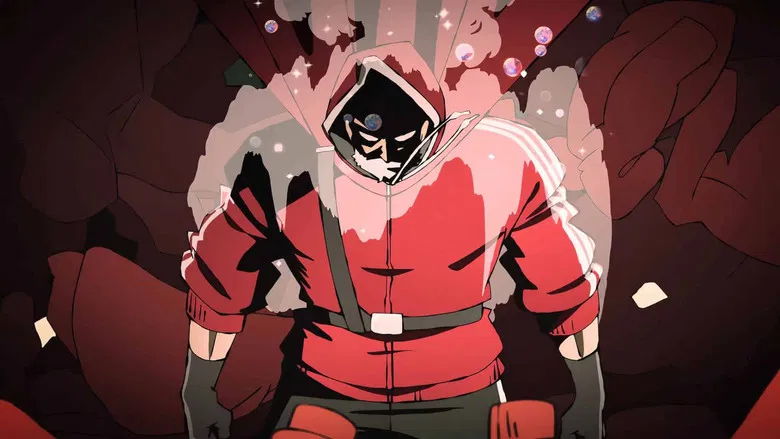
Itagaki’s writing shines in how she handles the "Santa" mythos. This isn't the jolly gift-giver of Coca-Cola ads; this is an ancient, pagan force that thrives on belief and sorrow. The series posits that to be an adult—to be "Santa"—is to accept the burden of other people’s pain. The villains, particularly the youth-obsessed school administrators, represent a culture that refuses to cede power to the next generation, trapping them in an eternal, ignorant innocence. The conflict is generational warfare literalized: the old devouring the young to stay young, while the young must become "old" (Santa) to survive.
However, the series is not without its stumbling blocks. The tonal shifts from high-school slice-of-life to supernatural horror can be whiplash-inducing, occasionally undermining the emotional stakes. The humor is pitch-black and often uncomfortable, alienating viewers looking for a straightforward shonen battle anime. Yet, this discomfort is arguably the point. Adolescence is cringe-inducing, violent, and confusing. *SANDA* refuses to smooth over the rough edges.
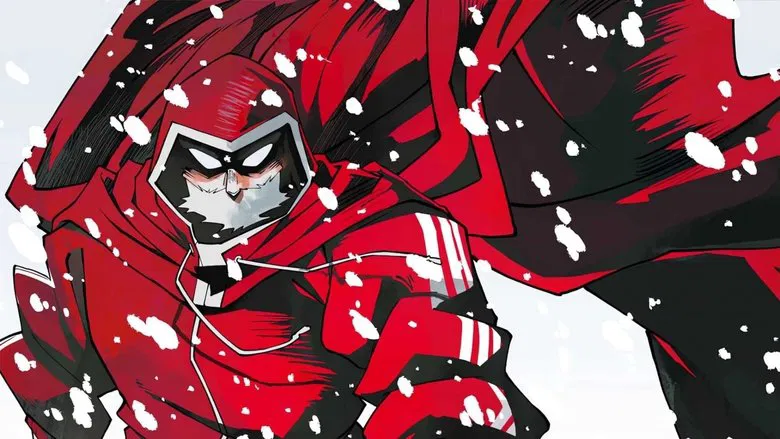
Ultimately, *SANDA* is a defiant piece of pop art. It argues that the greatest gift one can give a child is not safety, but the agency to face danger. In a medium often saturated with escapist power fantasies, this series offers something stranger and more honest: a fable about the terrifying necessity of growing up. It suggests that we must all eventually put on the red suit, not to deliver toys, but to shoulder the weight of a world that the previous generation broke.