The Architecture of DistrustThe modern domestic thriller often relies on a simple, mechanical engine: the lie. We are conditioned to expect the unreliable narrator, the hidden affair, the secret smartphone in the drawer. But *His & Hers*, the new limited series adaptation of Alice Feeney’s novel, attempts to construct something more structural than a mere game of cat-and-mouse. Under the direction of William Oldroyd (*Lady Macbeth*), this is not just a story about who killed whom; it is a sweltering, claustrophobic examination of how grief can curdle into suspicion, turning a marriage into a crime scene long before a body actually drops.

Oldroyd brings a cinematic weight to the humid landscapes of Georgia that elevates the material beyond the typical glossy streaming fare. The visual language here is oppressive, almost sticky. The series opens not with an explosion of action, but with the aftermath of violence—a body left on the hood of a car in the pouring rain, stabbed forty times. It is a tableau of rage that sets the temperature for everything that follows. The camera lingers on the environment—the relentless buzzing of cicadas, the sweat glistening on a detective’s brow—creating a sensory experience that mirrors the characters’ internal suffocation. The heat is not just weather; it is a manifestation of the pressure building between two people who know each other too well to feel safe.

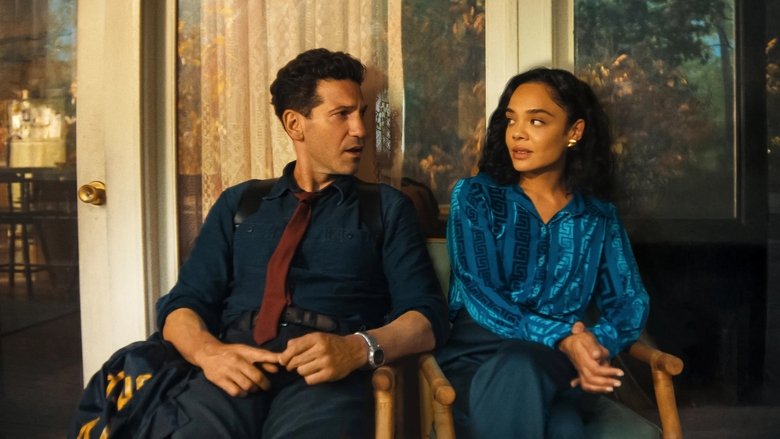
At the center of this thermal pressure cooker are Anna (Tessa Thompson) and Jack (Jon Bernthal), estranged spouses positioned on opposite sides of the yellow tape. Thompson plays Anna not as a damsel or a femme fatale, but as a woman hollowed out by loss, retreating into a hermetic existence until the murder pulls her back into the light. Her performance is jagged and brittle, a sharp contrast to Bernthal’s Jack, who wears his weariness like a heavy coat. Bernthal, often typecast as the aggressor, here finds a reservoir of sad, quiet desperation. When they share the screen, the air shifts. The tragedy of their shared past—the loss of a child—sits between them like a third character, distorting their view of reality. The "he said, she said" narrative structure isn't just a gimmick to hide the killer's identity; it is a tragic illustration of how two people can experience the same trauma and emerge with entirely different truths.
Ultimately, *His & Hers* transcends its airport-novel origins by taking the pain of its characters seriously. It refuses to treat the central murder solely as a puzzle to be solved for entertainment. Instead, the investigation becomes an autopsy of a relationship. While the plot eventually succumbs to the requisite twists and turns demanded by the genre, the emotional anchor holds. This is a series about the terrifying realization that the person you once loved might be capable of anything—or worse, that you might be capable of anything to escape them. It is a grim, beautifully shot piece of Southern Gothic noir that reminds us that the most dangerous mysteries are the ones we live with every day.