✦ AI-generated review
The Sorrow of the Modified Man
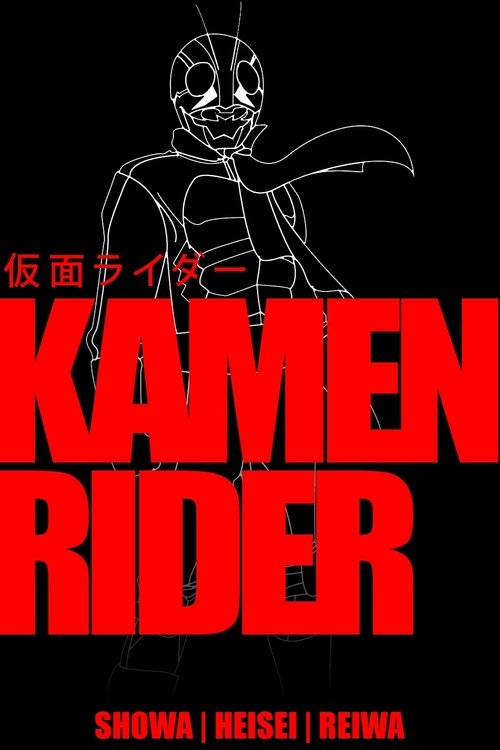
To the uninitiated modern eye, the 1971 premiere of *Kamen Rider* might look like a relic of high camp: a motorcycle-riding hero with a grasshopper motif, fighting rubber-suited monsters in gravel quarries. Yet, to dismiss it as mere kitsch is to ignore the profound melancholy that birthed the "Henshin" boom. Created by manga visionary Shotaro Ishinomori, this series is not merely a collection of action set pieces; it is a tragedy dressed in spandex, a story about the isolation of technology and the burden of stolen humanity.
The central conceit of *Kamen Rider* is terrifyingly simple. Takeshi Hongo is not a volunteer hero; he is a victim. Kidnapped by the neo-fascist organization Shocker—a group explicitly modeled on Nazi ideology and occult science—he is surgically altered into a "Kaizo Ningen" (Modified Human). He escapes moments before his brain is washed, leaving him in a purgatorial state: he possesses the body of a monster but the soul of a man. Unlike Western superheroes who often view their powers as gifts or genetic birthrights, Hongo’s power is a scar. Every time he transforms, he is reminded of the violence done to his body.
Visually, the series operates on a shoestring budget that inadvertently enhances its nightmarish qualities. The direction often utilizes stark, high-contrast lighting and Dutch angles that turn mundane construction sites into alien battlegrounds. The Shocker kaijin (monsters) are grotesque chimeras—spiders, bats, cobras—that represent nature twisted by industrial malice. While the special effects are dated, there is a visceral, tactile quality to the suit acting. The violence feels heavy; when Hongo lands a "Rider Kick," it isn’t just a finishing move, it is an exorcism of his own pent-up rage against his creators.
The "human core" of the series is anchored by Hiroshi Fujioka’s performance as Hongo. Even in the lighter moments, Fujioka carries a stoic weight, a "sorrow in the scarf" that blows in the wind behind him. This narrative arc faced a real-world twist when Fujioka was severely injured in a motorcycle stunt, forcing the introduction of a second Rider, Hayato Ichimonji. What could have been a production disaster instead deepened the show’s themes. The introduction of the "Double Riders" transformed the story from a tale of solitary suffering into one of brotherhood and shared trauma. They are two men who can never truly go back to normal society, finding solace only in their shared war.
Ultimately, *Kamen Rider* (1971) established a template that persists in Japanese media to this day: the idea that the hero and the villain are two sides of the same coin. The Rider uses Shocker’s technology to destroy Shocker. He is a glitch in their system, a weapon that developed a conscience. It is a series that asks whether one can remain human after their body has been turned into a machine, and answers with a resounding, tragic "yes." It is a masterpiece not of polish, but of spirit.