The Architecture of HumiliationIf the modern workplace is a prison of fluorescent lights and forced collegiality, Tim Robinson has spent the last decade acting as its court jester, screaming about the absurdity of the bars. In his previous work, *I Think You Should Leave*, Robinson mastered the art of the explosive social infraction—the moment a human being breaks the social contract and refuses to pick up the pieces. But with *The Chair Company*, his new HBO series co-created with Zach Kanin, Robinson trades the sprint of the sketch for the marathon of the conspiracy thriller. The result is not just a comedy, but a suffocating, brilliant meditation on the way minor indignities can metastasize into existential dread.

Robinson plays William "Ron" Trosper, a mid-level suburban dad whose life is upended by a singular, physical failure: his office chair collapses during a presentation. In a standard sitcom, this would be a beat of slapstick, resolved with a laugh track and a shrug. Here, it is an inciting incident of Kafkaesque proportions. The camera, directed with icy precision by Andrew DeYoung, lingers on Ron not as a clown, but as a victim of a universe that has suddenly revealed its hostility. The "humor" is there, but it is buried under layers of shame so dense they feel radioactive.
Visually, the series departs from the flat, bright aesthetic of Robinson’s sketch work. *The Chair Company* is shot in the shadowy, paranoid vernacular of 1970s political thrillers—think *The Parallax View* tailored for the corporate park. The office of the titular furniture manufacturer, Tecca, is rendered as a brutalist labyrinth, a space where silence is weaponized. When Ron begins his investigation into why the chair failed, the show treats his petty grievance with the gravity of a murder investigation. This tonal dissonance is the show’s greatest magic trick: by filming a customer service complaint like *All the President’s Men*, Robinson exposes the genuine horror of modern bureaucracy. We are all just one faulty product away from realizing we have no recourse, no voice, and no control.
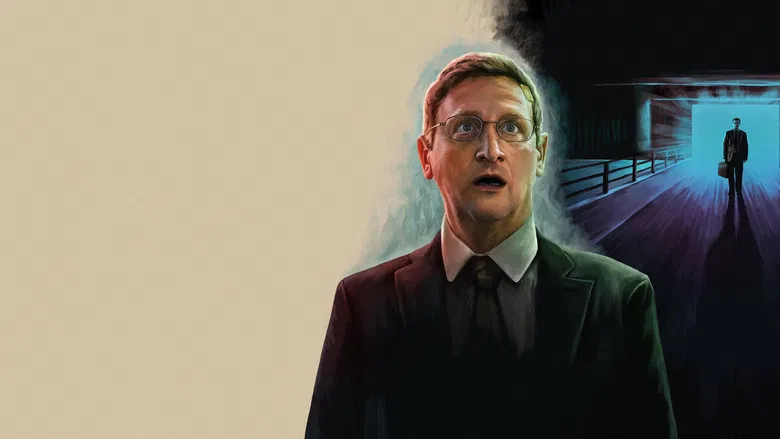
The heart of the series, however, lies in Robinson's performance. He has always been a physical virtuoso of discomfort, but as Ron, he taps into a profound well of pathos. Ron is not merely "awkward"; he is a man hallowed out by the suspicion that he doesn't matter. His obsession with the conspiracy is a desperate attempt to prove that his humiliation wasn't random—that there is a Grand Design, even if that design is malevolent. Watching him interact with his wife Barb (a grounding, excellent Lake Bell), we see the tragedy of a man who would rather be the target of a global plot than simply a guy who fell on his ass.
In the final episodes of this eight-part season, the narrative tightens, and the absurdity morphs into something genuinely thrilling. The "conspiracy" is both ridiculous and terrifyingly plausible, a critique of late-stage capitalism where products are garbage and the people who make them are ghosts. *The Chair Company* argues that in a world stripped of meaning, paranoia is the last refuge of the sane. It is a masterpiece of unease, proving that Tim Robinson is not just the funniest man on television, but perhaps its most astute dramatist of American anxiety.
 Verdict:
 A harrowing, hilarious evolution of the Robinson ethos that reimagines the conspiracy thriller for an era of customer service dead-ends.