The Gods Must Be ExhaustedThe modern Japanese idol industry is a machine designed to manufacture divinity. It sells not just music, but a carefully curated promise of availability, perfection, and eternal cheerfulness. We, the audience, purchase the fantasy that the star on the screen is a renewable resource of happiness. But what happens when the lights cut out and the god goes home? *Tamon’s B-Side*, the sharp and surprisingly tender new series from J.C.Staff, proposes an answer that is equal parts slapstick comedy and psychological study: the god collapses into a pile of dust bunnies and self-loathing.
Directed by Chika Nagaoka, a veteran who understands the grammar of idol anime intimately (having helmed parts of the *Uta no Prince-sama* franchise), the series offers a visual language that is bifurcated by design. When Tamon Fukuhara is "on," the animation is sharp, saturated, and flooded with the literal sparkles of the genre—he is the "Wild and Sexy" apex predator of the group F/ACE. But when he crosses the threshold of his apartment, the art shift is jarringly brilliant. The frame rate seems to drop; the colors desaturate into gloomy pastels; and Tamon himself physically shrinks, his sharp jawline dissolving into a slump of anxiety-ridden scribbles that recall the visual shorthand of *Bocchi the Rock!*.
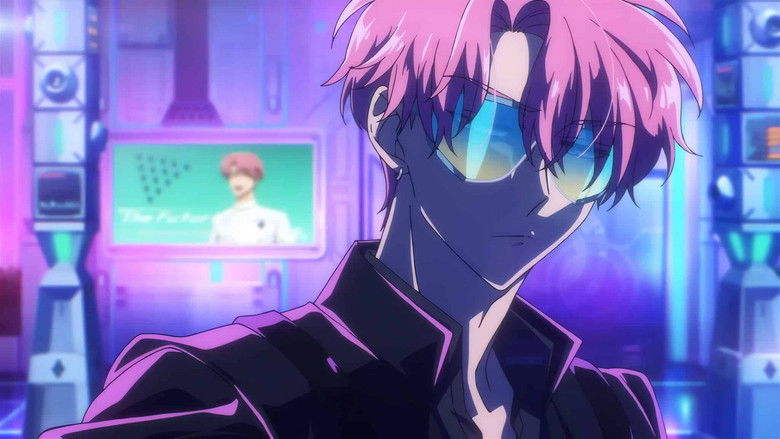
The brilliance of *Tamon’s B-Side* lies in how it frames this duality not as deception, but as exhaustion. The narrative vehicle is Utage Kinoshita (voiced with impeccable comedic timing by Saori Hayami), a high school housekeeper and devoted F/ACE fangirl who stumbles into Tamon’s private hell. Instead of the polished icon she worships, she finds a man who calls himself "trash," lives in squalor, and requires constant validation just to breathe.
In lesser hands, this would be a story about a fan disillusionment. But the script, adapting Yuki Shiwasu’s manga, pivots to something far more humanistic. Utage does not reject the "B-Side" Tamon; she simply expands her definition of fandom. Her housekeeping becomes a metaphor for emotional maintenance. There is a profound empathy in the way the camera lingers on the messy apartment—it is not just a gag about a bachelor pad, but a physical manifestation of Tamon’s internal clutter. The show argues that the "idol" is a collaborative performance, one that requires a support system to sweep up the debris of the ego.
While the comedy is brisk—driven by Tamon’s frantic switching between personas whenever he senses a threat—the underlying melancholia resonates. We are watching a young man crushed by the weight of being "Wild and Sexy" when he is naturally "Mild and Gloomy." In an era of curated social media lives, where we all maintain a public-facing avatar, Tamon’s struggle is universally recognizable.
Ultimately, *Tamon’s B-Side* is a love letter to the effort behind the image. It suggests that loving an idol—or a person—means accepting the unpolished, gloomy edit that exists off-camera. It creates a space where the "gods" are allowed to be tired, and where the greatest act of devotion isn't waving a glow stick, but helping someone do the dishes.