The Geometry of Unseen ThingsIn an era of high-definition hyper-visibility, where every micro-expression is captured in 4K and social media demands we perform our identities for a global audience, there is something radically subversive about a romance that refuses to be looked at. *The Invisible Man and His Soon-to-Be Wife* (or *Toumei Otoko to Ningen Onna*), which premiered this week amidst the loud fanfare of the Winter 2026 season, offers a quiet, almost tactile rebuttal to the tyranny of the image. Directed by Mitsuho Seta at Project No.9, this adaptation of Iwatobineko’s manga is not merely a supernatural office comedy; it is a delicate study of presence, suggesting that true intimacy isn't about staring into each other’s eyes, but sensing the weight of another soul in the room.

The premise reads like a classic farce but plays like a soft-spoken drama. Akira Tounome (voiced with gentlemanly warmth by Yohei Azakami) is a detective who is entirely invisible. He is a collection of floating fabrics and negative space. His employee, Shizuka Yakou (Yuka Nukui), is a blind woman who remains unphased by his transparency because she navigates the world through sound, smell, and intuition.
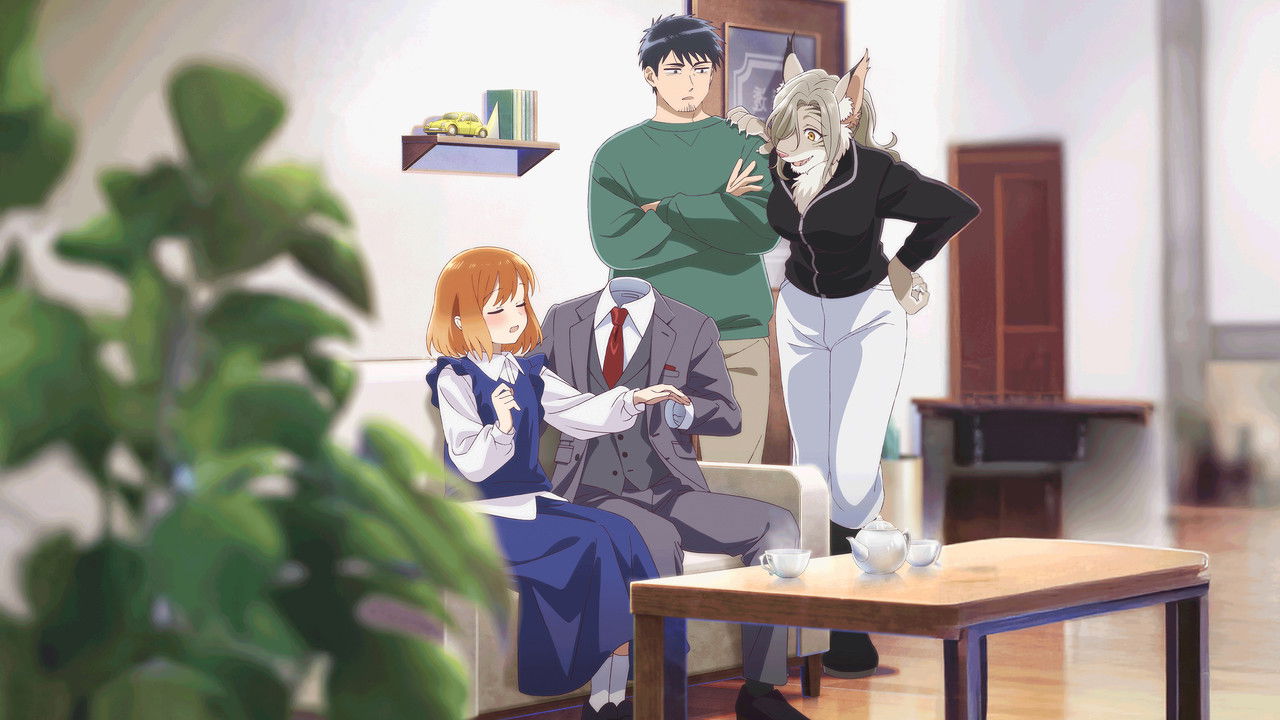
Visually, the series takes a fascinating risk. Animation is an art form entirely dependent on visual cues—facial expressions, the blush of a cheek, the widening of an eye. By erasing the protagonist's face, Seta forces the audience to engage with the medium differently. We are asked to read the "acting" in the slump of an empty suit jacket or the hesitation of a floating glove. It is a masterclass in animators finding character in physics rather than physiology. The visual language here is gentle, often utilizing a soft, pastel-adjacent palette that recalls the "iyashikei" (healing) genre, grounding the supernatural elements in a mundane, comforting reality.
But the true triumph of the series—at least in its opening movements—is its philosophical core. Modern romance is often predicated on attraction, a concept inherently tied to the visual. Akira and Shizuka’s relationship bypasses this entirely. Their connection is forged in what I call "haptic cinema"—scenes that emphasize touch and proximity over sight. When Shizuka reaches out to find Akira, her hand does not grasp at air; it finds a solid, beating heart that the rest of the world ignores. There is a profound empathy in how the script treats Shizuka’s blindness not as a tragedy to be fixed or a gimmick for pity, but as a valid, alternate mode of perceiving the truth. She "sees" Akira more clearly than those with 20/20 vision because she is not distracted by the absence of his face.
The surrounding cast, including the gruff beast-woman Jarashi, fleshes out a world where "difference" is banal rather than dangerous. Unlike the high-stakes xenophobia of *X-Men* or the gothic isolation of the classic Universal *Invisible Man*, this series posits a world where being a monster is just a logistical hassle, not a moral failing. It is a refreshing pivot from the "dark fantasy" boom of the early 2020s.
Ultimately, *The Invisible Man and His Soon-to-Be Wife* asks us to trust what we cannot see. In a cinematic landscape crowded with spectacle, explosions, and visual noise, this series dares to whisper. It suggests that love is not a spectacle to be watched, but a frequency to be felt. It is a warm, necessary reminder that even if we are invisible to the world, we remain real to the people who take the time to reach out. This is not just a romance; it is a restoration of human dignity in negative space.