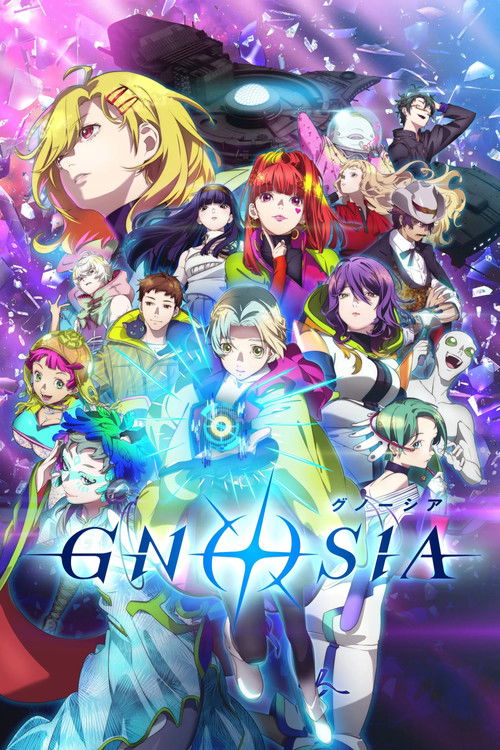
The Architecture of DistrustIn the vast, terrifying silence of space, the greatest threat is not the void outside, but the voice sitting across from you. *Gnosia*, the 2025 anime adaptation of the cult classic social deduction game, arrives not merely as a sci-fi thriller, but as a suffocating chamber piece about the fragility of truth. Directed by Kazuya Ichikawa and scripted by Jukki Hanada—the narrative architect behind *Steins;Gate*—the series transcends its "Werewolf-in-space" premise to ask a more haunting question: How many times can you murder your friends before you lose your own humanity?

The premise is deceptively mechanical: a crew is infiltrated by "Gnosia," alien entities that mimic humans and erase one victim per night. To survive, the crew must debate, deduce, and democratically vote one person into "cryo-sleep" daily. However, for the protagonist Yuri, the nightmare is circular. Trapped in a time loop, he relives the paranoia endlessly, with the roles of friend and foe shuffling in every iteration.
Ichikawa’s direction, supported by Domerica’s distinct animation style, creates a visual language of dissociation. The series retains the unique, watercolor-adjacent aesthetic of the original source material, washing the characters in soft, dreamlike hues that starkly contrast with the brutal sterility of their situation. This is not the grimy industrial sci-fi of *Alien*; it is a surreal, almost theatrical stage where the lighting feels like a spotlight on the accused. The debate scenes are framed with claustrophobic precision—eyes darting, fingers pointing, the camera lingering on micro-expressions that could denote guilt or simply terror.
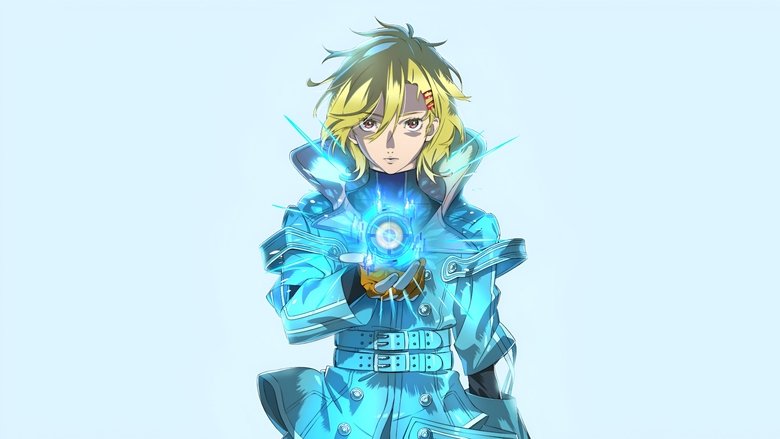
Where *Gnosia* truly excels, however, is in its refusal to treat the loop as a power fantasy. Unlike many protagonists in the genre who use foresight to become master manipulators, Yuri is weighed down by the accumulation of trauma. The "game" mechanics—identifying the liar—are stripped of their dopamine rush and replaced with a heavy emotional toll. We watch Yuri condemn a character to the cold sleep in one loop, knowing they are the enemy, only to be saved by that same character in the next loop where they are innocent. This narrative device deconstructs the binary of "good" and "evil," replacing it with a terrifying relativity.
The heart of the series lies in the quiet solidarity between Yuri and Setsu, the only other character aware of the loops. Their relationship is not built on romance, but on the shared, crushing burden of memory. In a standout scene in the mess hall, amidst the fabricated accusations of the day, their silent exchange communicates a profound exhaustion. They are soldiers in a war no one else remembers fighting. Hanada’s script shines here, allowing the silence to speak as loudly as the debates, highlighting the loneliness of omniscience.

Ultimately, *Gnosia* is a triumph of adaptation. It takes a system of cold logic and algorithms and infuses it with a beating, bleeding heart. It suggests that in a universe defined by deception, the ultimate act of rebellion is not just survival, but the willingness to trust again, even when experience tells you it will lead to your death. It is a chilling, beautiful, and deeply human reflection on the cost of suspicion.