The Gravity of the CurveIn the vocabulary of modern romance, speed is often a cheap proxy for adrenaline—a way to simulate stakes when the emotional engine is sputtering. But in Yu Chung-chung’s *Speed and Love*, velocity is not merely a spectacle; it is a desperate language for two people who have lost the ability to speak. This 2025 series, while packaged in the glossy sheen of a high-octane idol drama, surprisingly transcends its genre trappings to offer a meditation on the inertia of trauma. It asks a fundamental question: when life separates two souls onto divergent tracks, how much force is required to derail them back into alignment?
Director Yu Chung-chung, previously known for the confectionary sweetness of *Love is Sweet*, here trades sugar for grit, though he never quite abandons his romantic idealism. The story follows Jiang Mu (Yu Shuxin) and Jin Zhao (He Yu), adoptive siblings torn apart by parental divorce and reunited in the humid, neon-soaked labyrinth of Thailand.

Yu’s visual language in *Speed and Love* is a study in contrasts. The camera lingers on the grime of Jin Zhao’s mechanic life—the grease under fingernails, the claustrophobic shadows of the underground boxing ring—before cutting to the blinding, sanitized brightness of Jiang Mu’s world. This isn’t just aesthetic whiplash; it is narrative structure. The racing sequences are shot with a frenetic, almost suffocating closeness, placing the viewer inside the anxiety of the driver rather than offering a grandstand view. The roar of engines becomes a sonic motif for Jin Zhao’s internal chaos—a noise he uses to drown out the silence of his abandonment.
However, the series truly finds its footing not on the asphalt, but in the quiet, agonizing inches between the leads. The "pseudo-sibling" trope is a dangerous tightrope in Asian drama, often slipping into melodrama or discomfort. Yet, the script navigates this with a surprising tenderness. The central conflict isn't just the taboo of their shifting relationship, but the struggle to reconcile memory with reality. Yu Shuxin, often typecast in bubbly roles, brings a steely resilience to Jiang Mu. She is the "navigator" in more ways than one, trying to map a route through Jin Zhao’s hardened defenses.
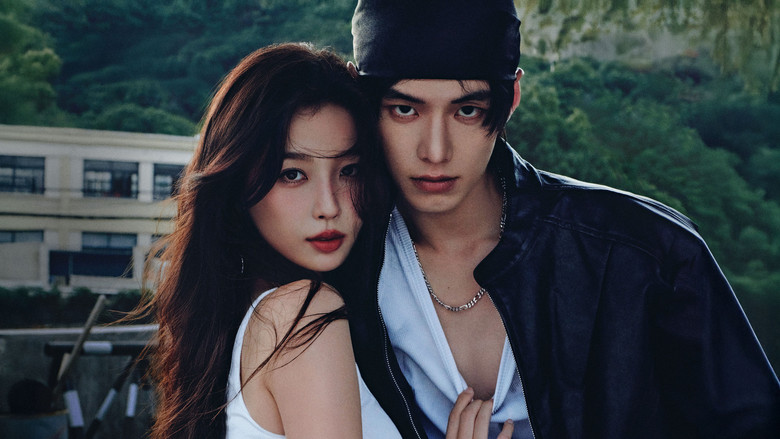
He Yu, conversely, plays Jin Zhao as a man actively trying to outrun his own worthlessness. There is a specific scene, widely discussed by critics, where Jin Zhao refuses to look at Jiang Mu during a torrential downpour, shielding her from the rain while remaining emotionally walled off. It is a moment of devastating physical intimacy paired with absolute psychological distance—a perfect encapsulation of the show’s central tragedy. He creates a character who believes that love is a collision course he must avoid to keep others safe.
If the series falters, it is in its midway reliance on external threats—smuggling rings and rival gangs—to generate tension that was already abundant in the characters' eyes. The narrative occasionally collapses under the weight of these genre clichés, momentarily forgetting that the most dangerous territory is the history shared between the two protagonists.

Ultimately, *Speed and Love* succeeds because it understands that healing is not a finish line, but an endurance race. It suggests that while trauma can accelerate us into darkness, love acts as the friction necessary to regain control. In a landscape of disposable romantic content, Yu Chung-chung has crafted a piece that, despite its flaws, manages to leave a lasting skid mark on the heart.