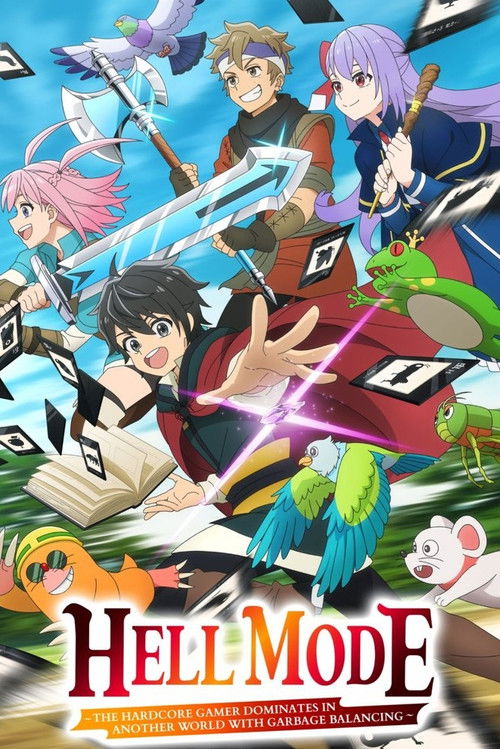
The Ecstasy of FrictionIn the modern cinematic landscape of Japanese animation, the *isekai* (portal fantasy) genre has largely become a sedative. It typically promises an escape from the drudgery of late-stage capitalism into a world of unearned power, where the protagonist is gifted a "cheat skill" that bypasses all struggle. We watch these shows to see the problems of life dissolve instantly. However, *Hell Mode: The Hardcore Gamer Dominates in Another World with Garbage Balancing*, released in the Winter 2026 season, offers a compelling counter-narrative. It suggests that for a certain type of modern mind, satisfaction lies not in the removal of obstacles, but in the fetishization of them.
Director Masato Tamagawa, adapting Hamuo’s light novel, presents us with Kenichi Yamada, a man for whom reality is too "easy"—or rather, too hollow. He doesn't seek escape; he seeks friction. By choosing the titular "Hell Mode" before his reincarnation, he rejects the power fantasy of ease in favor of the power fantasy of labor.
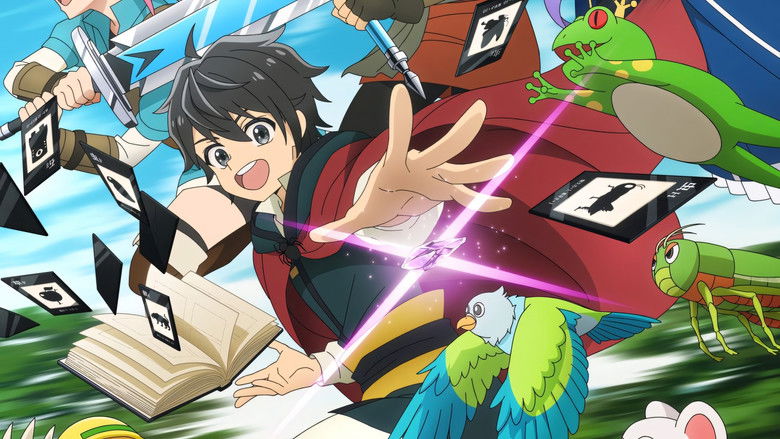
Visually, Yokohama Animation Laboratory approaches the series with a deceptive restraint. Those expecting the pyrotechnic excess of *Demon Slayer* will find instead a grounded, almost austere aesthetic that mirrors the protagonist’s poverty. The visual language here is one of scarcity. When the protagonist, now the serf child Allen, opens his menu, it is not the holographic, high-tech screen common to the genre, but a heavy, floating grimoire.
Tamagawa focuses the camera on the minutiae of Allen’s struggle: the dirt on his hands, the drab textures of the serf village, and the unimpressive nature of his early magic. The animation does not glorify the combat so much as it glorifies the *preparation* for combat. The "garbage balancing" of the title is translated visually into a world where the magical economy is broken; the Summoner class is theoretically powerful but practically useless because it requires magic stones—currency that a serf simply cannot access.
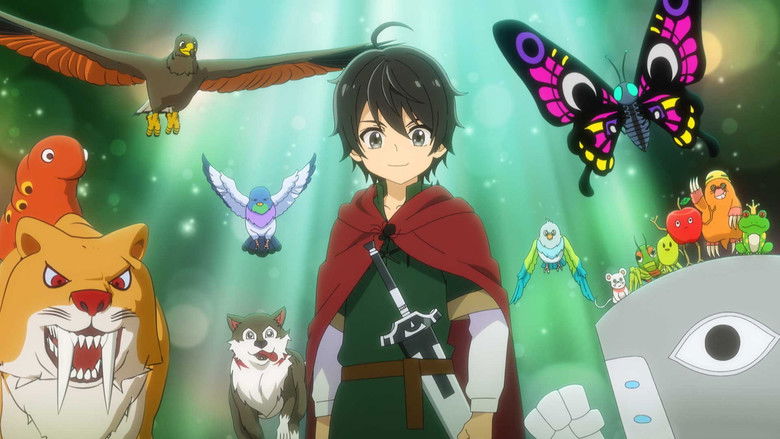
The heart of *Hell Mode* lies in this collision between gaming logic and socio-economic reality. Most *isekai* protagonists fight Demon Lords; Allen fights the poverty line. The narrative creates a fascinating tension by placing a "hardcore gamer" mentality—which views every problem as a math equation to be solved through repetition—into a feudal system designed to keep people in their place.
There is a strange, stoic humanism in watching Allen spend months throwing rocks at rodents to gain a fraction of a level. It turns the act of "grinding"—usually the most boring part of a video game—into a sisyphean act of rebellion. He is fighting a system that has rigged the numbers against him. The show argues that there is dignity in the grind, that the slow, agonizing accumulation of power is the only power that truly matters because it is the only kind that is earned.
Ultimately, *Hell Mode* is a polarized experience. It lacks the instant dopamine hits of its contemporaries, deliberately pacing itself at a crawl that demands patience. It is not a show about saving the world; it is a show about the obsession required to survive it. For an audience tired of heroes who are born special, Allen’s desperate, calculated clawing toward mediocrity feels ironically, refreshingly heroic.