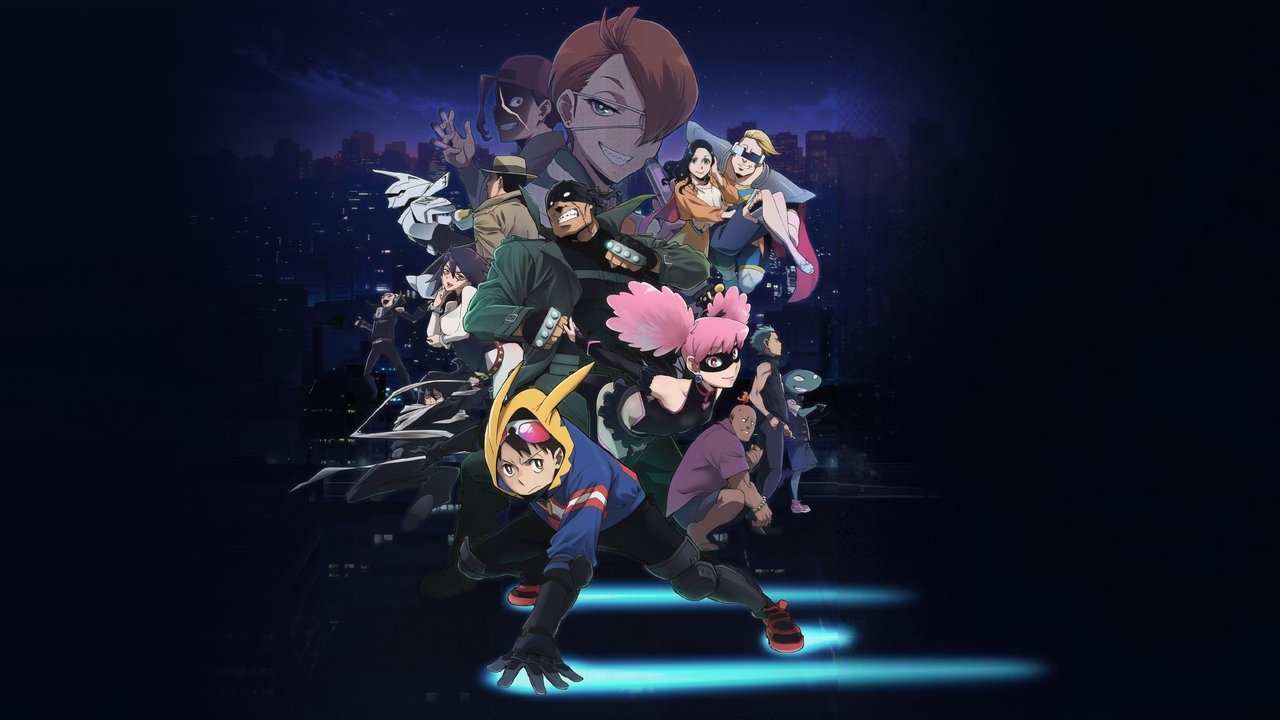
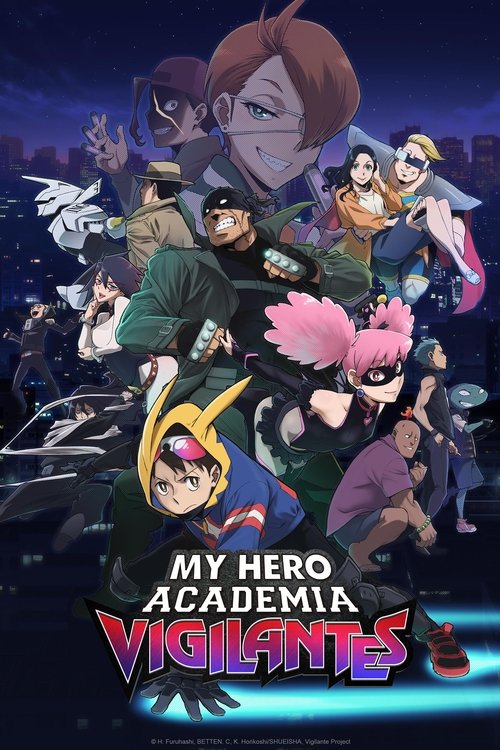
The Unlicensed Soul of the CityIf the mainline *My Hero Academia* saga is a gleaming monument to the institution of heroism—a world of high schools, licenses, and televised rankings—then *My Hero Academia: Vigilantes* is the gum stuck to the underside of that monument’s shoe. Premiering in 2025 under the confident direction of Kenichi Suzuki, this adaptation does something rare for a spinoff: it justifies its existence not by mimicking its parent series, but by inverting it. Here, the "Plus Ultra" shine is replaced by the flickering neon of Naruhata, a district where justice isn't a career path, but a dangerous, unpaid hobby.
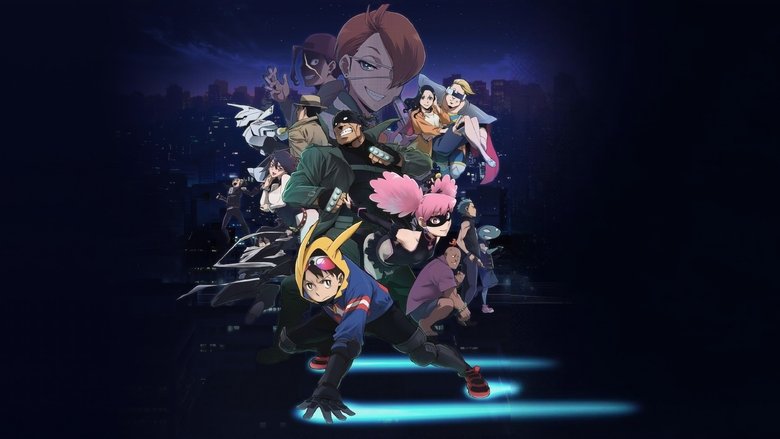
The series introduces us to Koichi Haimawari, a college student whose "Slide and Glide" quirk is dismissed by society as useful only for trash pickup and swift commutes. Unlike Izuku Midoriya, who chases a destiny handed down from the gods, Koichi is the patron saint of the "Good Enough." His journey into vigilantism isn't sparked by a desire to save the world, but by a simple, nagging inability to walk past a problem. Suzuki, bringing the kinetic, jagged energy he perfected in *JoJo’s Bizarre Adventure*, frames Koichi’s sliding movement with a tactile sense of friction. You feel the asphalt scraping against his palms. The visual language here is decidedly grittier; the colors are saturated but bruised, reflecting a world where "villains" are often just desperate neighbors overdosed on the "Trigger" drug rather than theatrical masterminds.

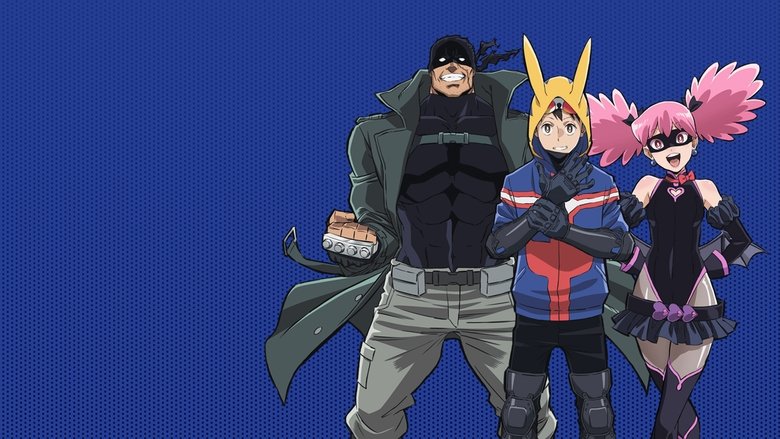
The narrative gravity, however, is generated by Knuckleduster, a quirkless brute who serves as Koichi’s reluctant mentor. If Koichi is the light-hearted Spider-Man of this equation, Knuckleduster is its Batman—aged, battered, and fueled by a terrifying, obsession-driven competence. The series excels in contrasting these two philosophies. While the licensed pros in the background are obsessed with branding and collateral damage, Knuckleduster operates with brutal efficiency. The animation shifts when he fights; the fluid superheroics vanish, replaced by bone-crunching impact frames and a visceral weight that reminds us that without a quirk, a human body is just fragile meat. This dynamic questions the very definition of a "hero." Is it the license that makes the savior, or the willingness to bleed in the dark where no cameras are rolling?
What *Vigilantes* achieves most successfully is a reduction in scale that paradoxically increases the emotional stakes. We are not watching battles for the fate of Japan; we are watching a struggle for a single neighborhood block. When the "Trigger" drug turns a shopkeeper into a monster, it’s a tragedy, not a statistic. The show treats the "illegal" act of unlicensed heroism with a nuance that the main series often glosses over. By focusing on the cracks in the superhuman society—the people the Pro Heroes are too busy to notice—the series builds a compelling case for the necessity of the shadow.
Ultimately, *Vigilantes* is a triumph of atmosphere and heart. It strips away the academic structure of the main franchise to reveal the raw, beating pulse of altruism underneath. It argues that you don't need a license to be a good person, and sometimes, the most important saves happen in the silence of an empty street, with only the hum of a sliding hero to bear witness.