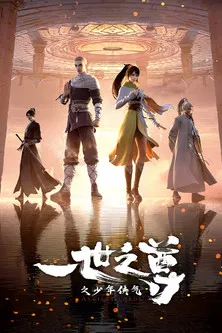
Defying the FlatlineIn the sprawling, often saturated landscape of *xianxia* (immortal hero) storytelling, Mao Ni’s *Ze Tian Ji* (Way of Choices) has always been an outlier. It is a narrative less about the accumulation of power and more about the philosophical defiance of inevitability. Previous adaptations—the live-action drama and the 2D donghua—struggled to balance the source material’s intricate political dialogue with the kinetic demands of the genre. The 2D series, in particular, famously withered into what fans derisively called a "PowerPoint presentation" in its later seasons. Enter Yuanjun Zeng’s 2026 adaptation, *Fighter of the Destiny 3D*. By moving Chen Changsheng’s journey into the third dimension, the series does more than just upgrade the polygon count; it finally gives this story the tangible, suffocating weight it has always required.
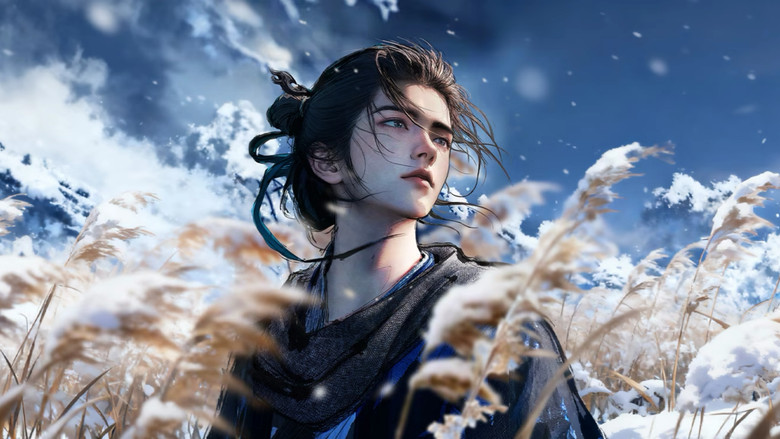
The transition to 3D CGI is often viewed skeptically by purists, yet here, it serves a specific narrative function. Director Yuanjun Zeng utilizes the medium to create a world that feels aggressively present. The opening sequences, detailing the descent of the mystical meteor and the scattering of the totems, possess a geological heaviness that 2D sketches previously failed to convey. When the young orphan Chen Changsheng walks the path from his mountain sanctuary to the Divine Capital, the environment is not merely a painted backdrop but a physical obstacle course of light, shadow, and texture. This visual density mirrors the protagonist’s internal burden: the knowledge that his blood is both a cure for others and a curse that limits his life to twenty years.
The series distinguishes itself from peers like *Soul Land* through its restraint. Where other 3D donghua prioritize pyrotechnic particle effects to mask hollow choreography, *Fighter of the Destiny 3D* focuses on the geometry of the fight. The "Grand Examination" sequences are treated with a tactical clarity that honors the protagonist’s intellect over his brawn. Changsheng fights not because he is the strongest, but because he has calculated the precise angle of survival. The animation captures the micro-expressions of a boy who is terrified of death but too stubborn to yield to it—a nuance that Yeqiao Yan’s performance anchors with a vocal delivery that balances youthful fragility with an elder’s weariness.
At its core, this adaptation succeeds because it understands the tragedy of its hero. In a high-definition world teeming with gods, demons, and vibrant colors, Changsheng’s gray, predetermined fate feels all the more cruel. The "20-year clock" ticking over his head is amplified by the sheer beauty of the world he is destined to leave behind. The series doesn’t just show us a hero fighting monsters; it shows us a transient being fighting for the right to exist in a permanent world.
Ultimately, *Fighter of the Destiny 3D* is a successful reincarnation of a beloved intellectual property. It sheds the "flatness" of its predecessors to offer a vision of destiny that is multi-dimensional, dangerous, and breathtakingly alive. It is not just a reboot; it is a correction of the record, proving that some stories need depth—literal and figurative—to truly breathe.