The Architecture of HesitationIn an era of cinema defined by narrative velocity—where characters rush to label their traumas and broadcast their redemptions—there is something almost radical about a story that refuses to move. *Sounds of Winter* (or *Fuyu no Nanka sa, Haru no Nanka ne*), the new series from directors Rikiya Imaizumi and Nobuhiro Yamashita, operates on a frequency that many modern viewers might find disorienting. It is a work of aggressive quietness, a study in the spaces between words where the real emotional attrition of adulthood takes place.
Imaizumi, a filmmaker who has spent his career dissecting the awkward geometry of unrequited love (*Just Only Love*, *Call Me Chihiro*), finds a perfect vessel here in the episodic format. He essentially asks us to sit in the waiting room of a relationship. The camera does not chase the drama; it lingers on the stillness of a laundromat at night, the hum of washing machines providing a mechanical heartbeat to a life that feels suspended.

The visual language of *Sounds of Winter* is one of isolation amidst intimacy. The cinematography favors mid-shots that trap the characters in their domestic environments—novelist Ayana (Hana Sugisaki) is frequently framed by the clutter of her vintage clothing store job or the stark white of her manuscript pages. These are not merely sets; they are extensions of her internal paralysis. The lighting is often cool, evoking the seasonal chill of the title, suggesting that the "Spring" mentioned in the original Japanese title is a thaw that hasn't quite arrived.
At the center of this frozen landscape is Hana Sugisaki’s Ayana, a performance of remarkable interiority. Sugisaki does not play Ayana as a tragic figure, but as a woman exhausted by the labor of feeling. Her reluctance to say "I love you" to her boyfriend Yukio (Ryo Narita) is not presented as a puzzle to be solved, but as a valid emotional texture. In one early, pivotal interaction, the silence between Ayana and Yukio does more heavy lifting than any monologue could. We watch her struggle not with the absence of love, but with the terrifying ambiguity of it. Does she love him? Or does she just love the safety he provides? The script refuses to hand us the answer.
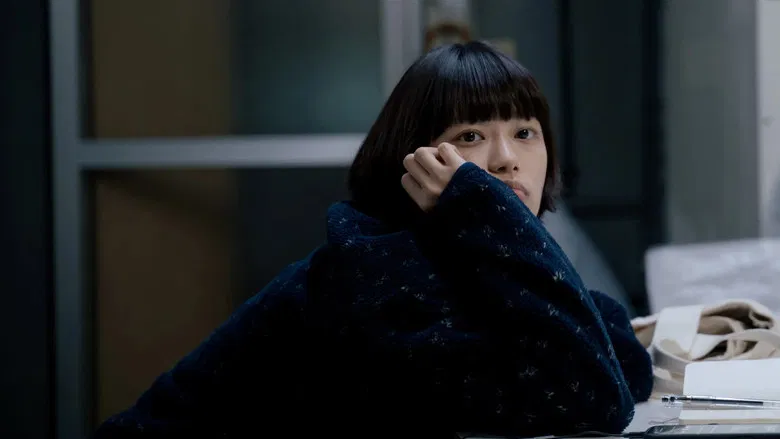
This is where the collaboration between Imaizumi and Yamashita shines. They understand that the "sound" of winter is often silence. Ryo Narita matches Sugisaki’s reserve with a performance of gentle intrusion; his character is "soft as snow," present but easily dissolved. The tension arises not from shouting matches, but from the fear that this fragile ecosystem they’ve built will collapse under the weight of a single honest conversation.
As the series unfolds, it becomes clear that this is not a romance in the traditional sense. It is an autopsy of the "relationship"—that social construct we use to organize our loneliness. By stripping away the melodrama, *Sounds of Winter* forces us to confront the uncomfortable reality that sometimes, we are neither happy nor unhappy; we are simply waiting for the season to change. It is a brave, melancholy piece of television that demands patience, rewarding those willing to listen to its quiet desperation.