✦ AI-generated review
The Glitch in the Happy Ending
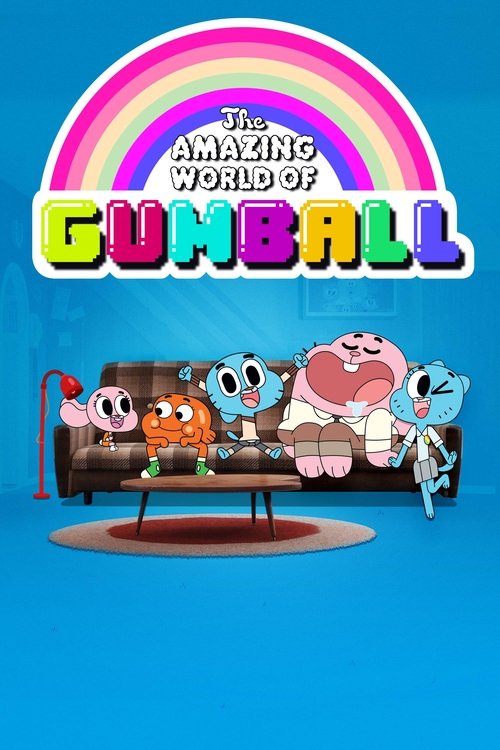
If the traditional family sitcom is a warm blanket—a predictable loop of conflict and resolution where the status quo is god—then *The Amazing World of Gumball* is the moment that blanket catches fire. Created by Ben Bocquelet, this British-American animated series (2011–2019) disguises itself as a cheerful procedural about a blue cat and his adoptive goldfish brother. Yet, beneath its candy-colored exterior lies one of the most intellectually daring, visually anarchic, and deeply existential works of television produced in the last decade. It is not merely a cartoon; it is a primer on post-modernism for the playground set.
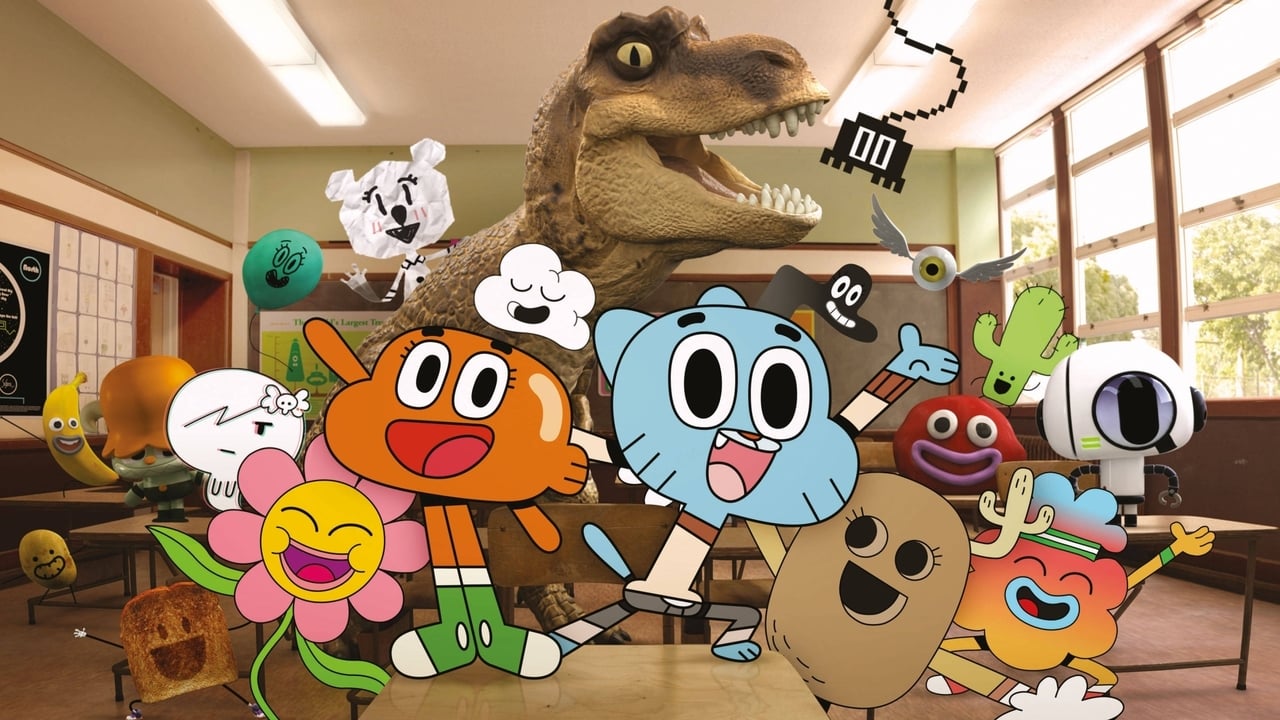
To watch *Gumball* is to witness the collapse of aesthetic boundaries. Bocquelet’s genius lies in his visual language, a mixed-media pastiche that creates a coherent reality out of chaos. The protagonist, Gumball Watterson, is a flat, 2D vector animation. His schoolmate, Tina, is a hyper-realistic CGI tyrannosaur. Their teacher is a stop-motion ape; the class clown is a 3D balloon. They inhabit backgrounds that are often gritty, photographic plates of real-world suburbia. In lesser hands, this visual dissonance would be a gimmick. Here, it serves a narrative function: it reflects the fragmented, hyper-saturated digital landscape that modern children inhabit. The show implies that in a world of infinite aesthetic variance, the only thing that binds us is our shared dysfunction.
This dysfunction is best exemplified in the show’s deconstruction of television tropes. *Gumball* possesses a terrifying level of self-awareness. It knows it is a show, and it frequently punishes its characters for attempting to escape their genre constraints. Consider the seminal episode "The Job," a masterpiece of meta-commentary. In the sitcom lexicon, the "lazy father" is a staple. When Richard Watterson, the family’s indolent patriarch, actually obtains gainful employment as a pizza delivery driver, the universe rejects the development. The sky turns purple; gravity inverts; the fabric of reality begins to tear. The show argues that the "status quo" is not just a writing crutch, but a cosmic prison. The characters are trapped in their archetypes, and any deviation invites an ontological apocalypse.
Yet, for all its cynicism about the medium, the series retains a beating, human heart. The Watterson family—Nicole, the rage-filled but devoted mother; Richard, the man-child; Anais, the ignored intellectual; and the central duo—operates with a chaotic loyalty that feels more authentic than the sanitized affection of live-action peers. Gumball and Darwin’s bond is the anchor in this visual storm. Their optimism is not born of ignorance, but of resilience. They navigate a world that is frequently hostile, nonsensical, and on the verge of being "cancelled" (a threat the show literalizes with "The Void," a terrifying dimension where mistake characters are discarded).
Ultimately, *The Amazing World of Gumball* is a tragedy dressed as a farce. It posits that our lives are governed by invisible, arbitrary rules that we can neither see nor control. But it also suggests that there is joy in the glitch. In the finale, "The Inquisition," the show refuses to give us a tidy conclusion, instead freezing the narrative in a moment of unresolved peril. It was a controversial move, but a fitting one. A show that spent six seasons dismantling the artificial safety of the sitcom ending could not, in good faith, provide one for itself. It remains a vibrant, screaming testament to the beauty of the broken.