✦ AI-generated review
The Boy King of Adventure Bay
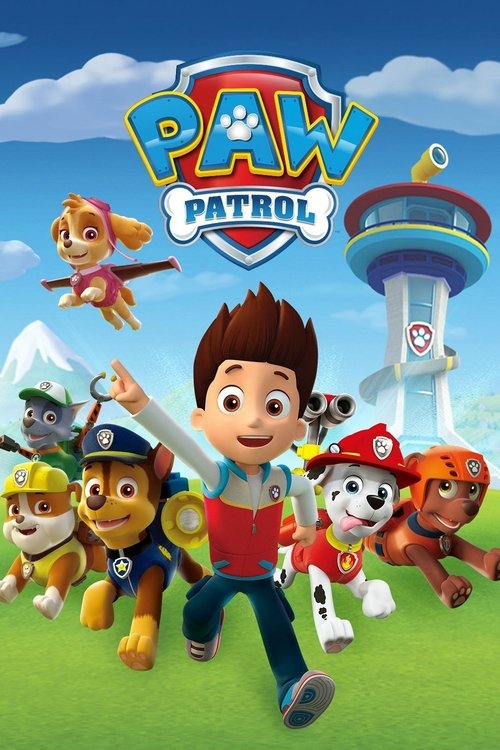
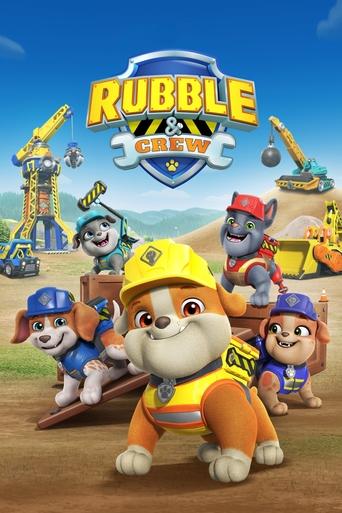
To dismiss the cultural phenomenon of *PAW Patrol* as merely a vehicle for plastic merchandise is to miss the fascinating, if slightly chilling, political philosophy lurking beneath its high-gloss fur. Since its debut in 2013, this Canadian animated juggernaut has offered a vision of the world that is seductive in its clarity and terrifying in its implications. Here, in the sun-drenched, friction-free utopia of Adventure Bay, we witness a society where the state has withered away, replaced entirely by the benevolence of a ten-year-old technocrat and his paramilitary canine unit.
Visually, the series is a triumph of the sanitized aesthetic. The animation—clean, bright, and utterly devoid of dirt or entropy—mirrors the moral universe it depicts. Adventure Bay is a world without poverty, crime, or systemic failure. It is a place of perpetual sunshine where the only crises are logistical. A cat is stuck; a boat has drifted; a festival is threatened by a lack of ice. These are not problems that require policy or community organizing; they require equipment. The directors employ a visual language of smooth surfaces and satisfying mechanical clicks. When the pups slide down to their vehicles, the sequence is framed with the reverence of a religious liturgy. It is the worship of the machine, the comforting certainty that for every chaotic variable, there is a specific, branded gadget designed to neutralize it.
At the center of this technocratic web sits Ryder, a character who exerts a quiet, terrifying dominance over the narrative. He is the Boy King, an unmoved mover who watches over his domain from the literal ivory tower of the Lookout. Ryder has no parents, no bedtime, and seemingly infinite capital. He represents the ultimate libertarian fantasy: the private contractor who is infinitely more competent than the public servant.
This dynamic is most painfully clear in the character of Mayor Goodway, a hysterical, incompetent bureaucrat who carries a purse chicken and cannot perform the simplest tasks without "yelping for help." She is the show’s scathing indictment of representative democracy. In Adventure Bay, the elected officials are helpless infants; the true power lies with the private citizen who owns the drones.
The emotional core of the show, however, is not power, but purpose. The pups—Chase, Marshall, Skye, and the rest—do not have inner lives so much as they have functions. They are happy only when they are serving the will of Ryder. Chase, the police dog, is particularly fascinating as a cultural artifact. In an era of complex discourse surrounding law enforcement, Chase offers a nostalgic, uncomplicated vision of authority: he is a "good boy" who always follows orders. The tragedy of the characters, if one can call it that, is their total lack of autonomy. They exist to be deployed. They are assets in Ryder’s portfolio of solutions.
Why, then, does this resonate so deeply with the preschool mind? Because childhood is a time of terrifying powerlessness. Children live in a world governed by giants who make inexplicable rules. *PAW Patrol* inverts this anxiety. It presents a world where a child is the supreme authority, where the adults are the foolish ones, and where every problem, no matter how scary, can be solved in twenty-two minutes with the right grappling hook.
Ultimately, *PAW Patrol* is a soothing balm for a chaotic age. It promises that the world is fixable, that authority is benevolent, and that there is a safety net waiting to catch us. It just neglects to mention that the safety net is privately owned, and the price of rescue is absolute obedience.