✦ AI-generated review
The Glory of the Cosmic Screw-Up
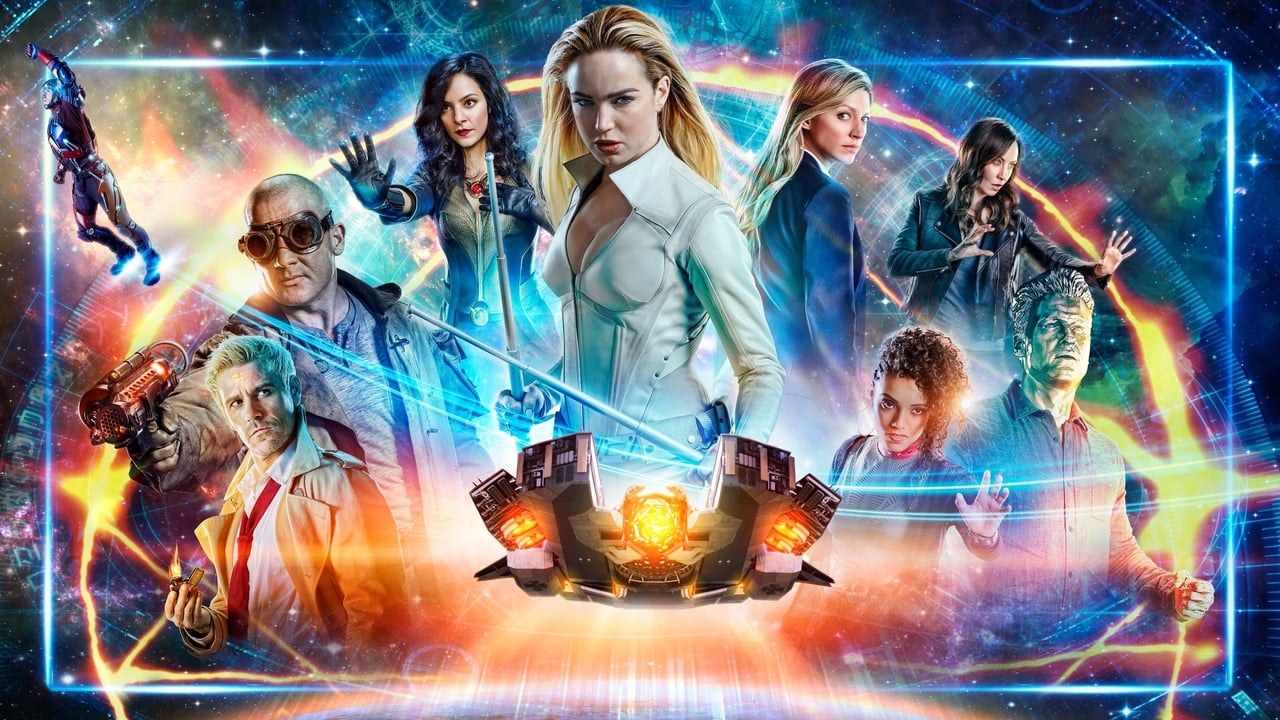
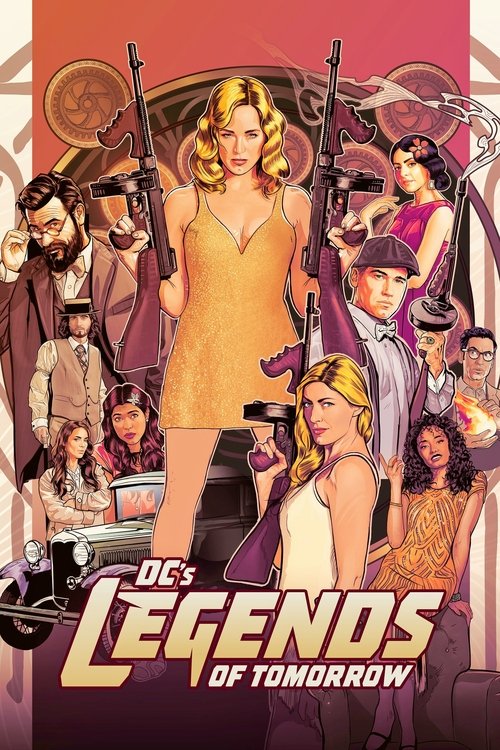
In the grand, often self-serious architecture of the "Arrowverse"—a television franchise built on the brooding abs of Oliver Queen and the earnest, teary-eyed heroism of Barry Allen—*DC’s Legends of Tomorrow* began as an afterthought. It was constructed as a warehouse for the franchise's narrative spare parts: the villains, the sidekicks, and the characters who didn't quite have the gravity to anchor their own serials. Yet, over the course of seven seasons, this series accomplished something remarkably rare in the modern superhero industrial complex: it stopped trying to be cool, and in doing so, became the most radically human entry in the canon.
To understand the brilliance of *Legends*, one must first acknowledge its initial failure. The first season was a dour affair, shackled to the grim-dark aesthetics of its parent shows and burdened by a monotonous villain, Vandal Savage. It tried desperately to be a "serious" sci-fi epic. But then, a fascinating metamorphosis occurred. The showrunners seemed to realize that a team comprised of a pyromaniac, an assassin, and a shrinking scientist was inherently ridiculous. Instead of fighting that absurdity, they leaned into it with the force of a gale.
The visual and narrative language of the series shifted from generic action to high-camp pastiche. The Waverider, their time-traveling ship, ceased to be a military vessel and became a frat house floating through the temporal zone. The show’s defining image is not a heroic pose atop a gargoyle, but the Season 3 finale, where the team defeats a high-fantasy demon not with a laser beam, but by psychically manifesting a fifty-foot-tall, cuddly blue plush toy named Beebo to body-slam the entity into submission. This moment was a manifesto. It rejected the hollow "city-destroying sky beam" tropes of blockbuster cinema in favor of a climax that was patently insane, yet emotionally earned. It argued that the power of these characters lay not in their muscles, but in their collective imagination and love for one another.
At the center of this chaotic hurricane was Sara Lance (Caity Lotz). Her trajectory from the "White Canary"—a soulless assassin defined by trauma and bloodlust—to the weary, responsible captain of a time-ship is one of the most nuanced character arcs in the genre. Unlike Batman, whose heroism is fueled by isolation, Sara’s redemption is found in the noise of community. She creates a space where "broken" people don't have to be fixed to be valuable; they just have to show up. The emotional core of the series is the assertion that screw-ups, when united, possess a durability that perfection lacks.
While the show was cancelled in 2022 on an unresolved cliffhanger, its legacy is secure. *Legends of Tomorrow* deconstructed the superhero mythos by asking a simple question: What happens if the heroes aren't gods or billionaires, but the people who get left behind? The answer was a show that treated history not as a museum to be preserved, but as a playground to be saved—often from the Legends themselves. In a genre obsessed with destiny and grim fate, *Legends* championed the messy, improvised beauty of free will. It was a glorious mess, and it was perfect.