✦ AI-generated review
The Technicolor Fever Dream of 1813
To call Netflix’s *Bridgerton* a historical drama is to fundamentally misunderstand its project. It is not a window into the Regency era; it is a mirror reflecting our own modern desires, costumed in empire waists and cravats. Under the stewardship of Shondaland, this adaptation of Julia Quinn’s novels has done something radical: it has liberated the period piece from the suffocating beige of historical accuracy, replacing it with a vibrant, candy-colored fantasy of an inclusive, sexually charged aristocracy. It is history not as it was, but as we might wish it to be—a playground for the female gaze.
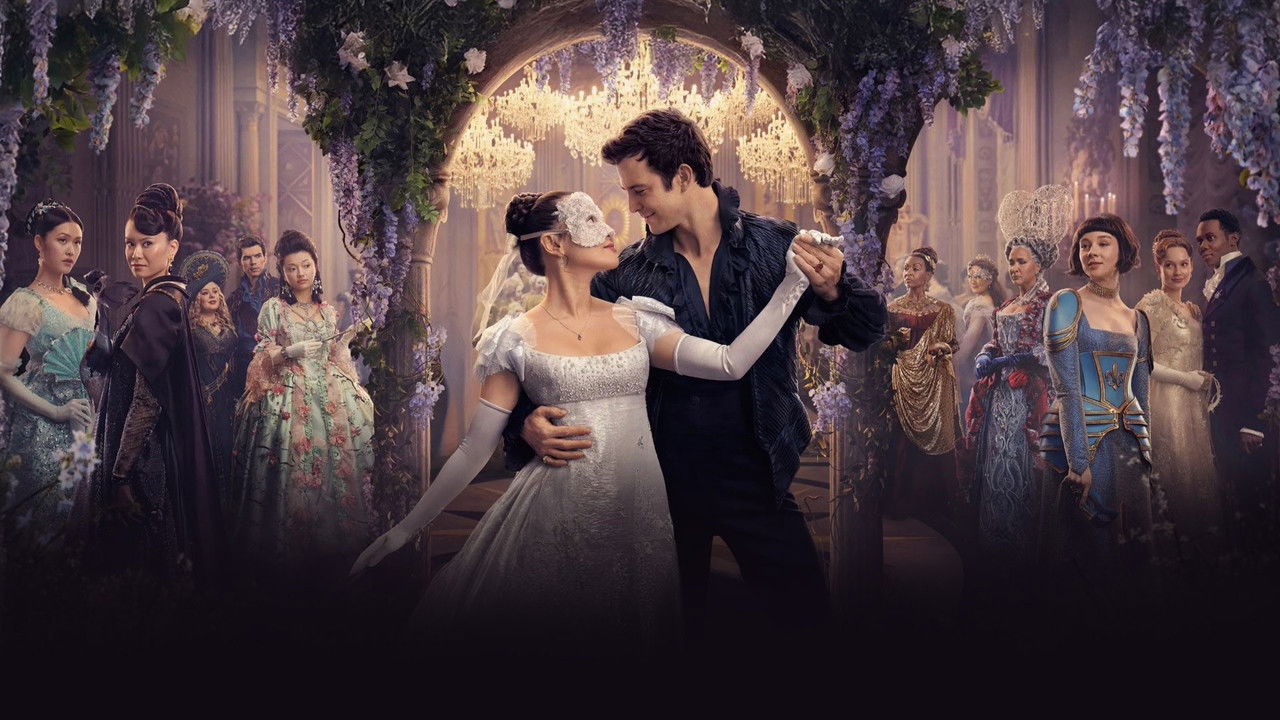
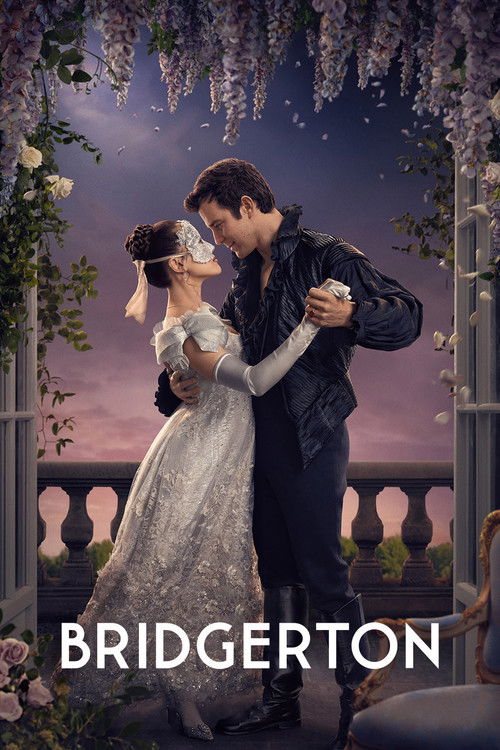
The show’s visual language is its most immediate weapon. The cinematography does not aim for the gritty realism of *Wolf Hall* or the stately repression of *Downton Abbey*. Instead, it offers a suffocatingly lush aesthetic—wisteria hangs heavy over every archway, and the costumes (often criticized by purists for their neon hues and synthetic fabrics) serve as emotional signaling rather than historical documentation. When a character wears a shade of yellow that didn't exist in 1813, it isn't an error; it is a declaration of their "new money" anxiety. The anachronistic string quartet covers of Ariana Grande and Billie Eilish further cement this: the show uses the trappings of the past to amplify the emotional beats of the present.
At the heart of this spinning carousel is the show’s unique anthology structure, which demands a difficult balancing act: the audience must fall in love with a new couple every season while maintaining investment in the wider ensemble. It is a testament to the show's writing that characters like Benedict Bridgerton (played with a weary, charming fluidity by Luke Thompson) remain compelling even when they are on the periphery. Thompson’s Benedict has spent early seasons as the "spare" heir, drifting through art studios and opium dens, representing a bohemian restlessness that provides a necessary counterweight to the rigid duty of his siblings.
The genius of *Bridgerton* lies in how it seeds these future conflicts. By the time the narrative baton prepares to pass to Benedict and his future counterpart (the casting of Yerin Ha as Sophie Baek marking the next chapter of this "ton"), the audience is already pre-sold on the romance. We are not just watching a love story; we are watching a machine built to manufacture longing. The inclusion of diverse casting—once a controversial talking point—has settled into the show’s DNA, proving that the fantasy of the "debutante season" need not be restricted by the racial prejudices of the real 19th century.
However, the series is not without its narrative collapses. In its rush to be breathless and steamy, the scripts sometimes sacrifice character logic for the sake of a cliffhanger. The drama can feel circular, with the "marriage mart" serving as a gilded cage that the characters complain about yet eagerly rush back into. But to demand gritty realism from *Bridgerton* is to miss the point. This is a show about the *performance* of love.
Ultimately, *Bridgerton* succeeds because it treats romance with the same gravity that other prestigious dramas treat war or politics. It validates the "happily ever after" not as a cliché, but as a hard-won victory against a society that views marriage as a business transaction. It is a confection, certainly—sugary, light, and easy to consume—but it is cooked with a technical precision that demands respect.