✦ AI-generated review
The Geometry of Grief
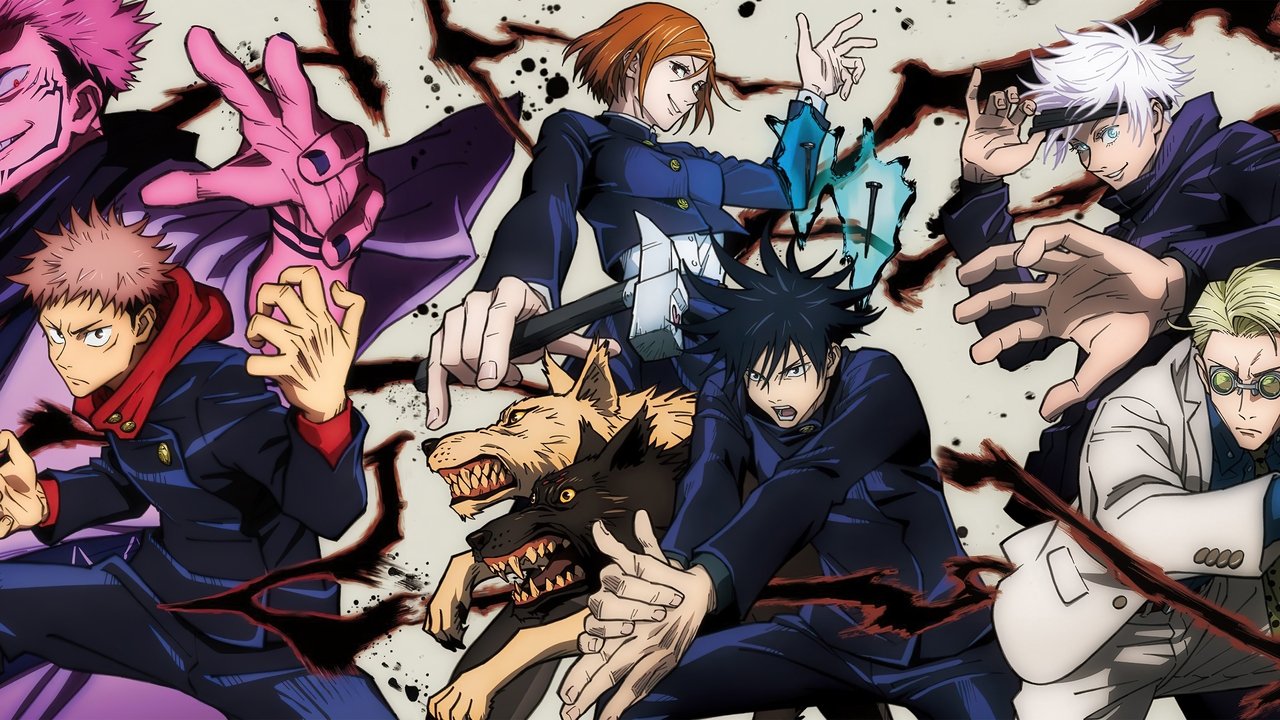
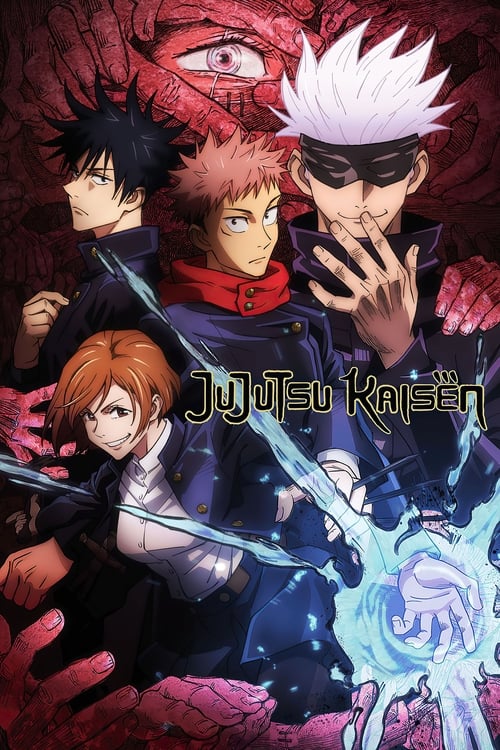
In the traditional architecture of shonen anime, the protagonist is a solar entity—a source of light that banishes the dark through sheer moral absolute. *Jujutsu Kaisen*, however, operates on a grimier, more nihilistic frequency. Here, the "hero," Yuji Itadori, is not a beacon of hope but a vessel for catastrophe, a boy who swallows poison to keep the world from getting sick, only to realize the sickness is terminal. This is a series less interested in the triumph of good over evil than in the crushing administrative weight of death.
To watch *Jujutsu Kaisen*, particularly its transformative second season, is to witness a fascinating shift in directorial philosophy. The first season, helmed by Sunghoo Park, was a masterclass in kinetic brutality—a sleek, high-octane martial arts film where the camera tracked every punch with visceral clarity. But the transition to director Shota Goshozono for the "Hidden Inventory" and "Shibuya Incident" arcs introduced a more cinematic, almost avant-garde visual language. Goshozono trades clarity for atmosphere; he utilizes fish-eye lenses, disorienting lighting, and experimental aspect ratios to create a sense of claustrophobia. The result is not just "action" but a suffocating mood piece where the environment of Shibuya itself feels like a closing coffin.
This visual evolution serves the narrative’s descent into chaos. The central discourse surrounding the series often fixates on its relentless pacing and the "Shibuya Incident"—a narrative arc that effectively functions as a prolonged terror attack on the cast. But the technical brilliance of Studio MAPPA (achieved, it must be noted, under reported conditions of extreme animator strain that eerily mirror the exhaustion of the on-screen sorcerers) is not just spectacle. It is a tool of cruelty. When the fan-favorite Kento Nanami meets his end, the scene is not treated with the bombastic glory of a warrior’s death. Instead, it is a delirious montage of a beach vacation intercut with his charred, skeletal reality. It is a quiet, hallucinatory tragedy that underscores the series’ central thesis: a "proper death" is a lie we tell ourselves to cope with the randomness of violence.
At the heart of this bloodshed lies the deconstruction of the "chosen one" trope. Yuji Itadori begins the series believing his grandfather’s dying wish—to help people so he doesn't die alone. By the end of the Shibuya arc, that altruism has been weaponized against him. The series reaches a chilling crescendo in the "snow" scene between Yuji and the curse Mahito. Stripped of his naive ideals, Yuji looks at the creature who has systematically dismantled his life and simply accepts his role as a cog in a machine of exorcism. "I am you," he admits—a moment that rejects the heat of revenge for the cold resolve of duty. He is no longer fighting to save everyone; he is fighting because that is simply what he is built to do.
*Jujutsu Kaisen* stands as a grim reflection of modern anxieties. It removes the safety net of the "strongest sorcerer," Satoru Gojo, to ask what happens when the systems that protect us collapse. It suggests that in a world defined by curses—born from human negativity—the best we can hope for is not a happy ending, but a survival that allows us to witness the next dawn. It is a dazzling, devastating work that asks us to look into the abyss, and then, without flinching, walk into it.