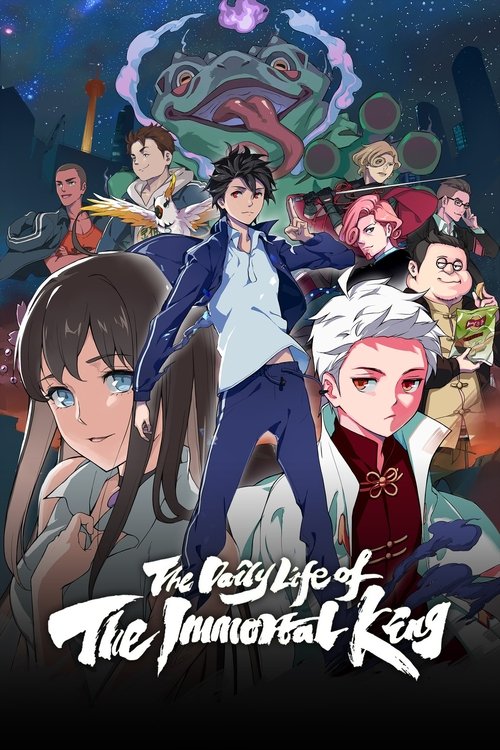
The Burden of OmnipotenceIn the crowded pantheon of modern animation, where heroes usually scream their ambitions to the heavens, *The Daily Life of the Immortal King* (2020) offers a protagonist who barely whispers. Wang Ling is not a hero on a journey of ascent; he is a god attempting a descent. Directed by Xuan Ku, this donghua (Chinese animation) serves as a sharp, satirical inversion of the *xianxia* genre—stories of cultivation where mortals seek immortality through rigorous training. Here, the summit has already been reached by a six-year-old, and the rest of the series is a precarious balancing act between cosmic power and the mundane desire for a bag of crispy noodles.

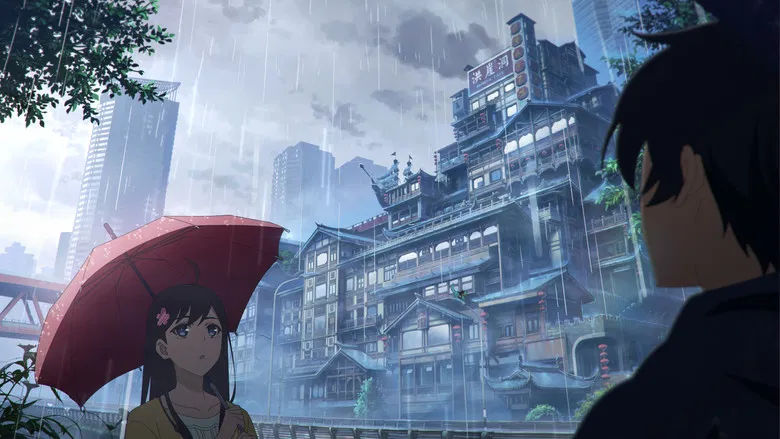
Visually, the series operates in a vibrant collision of the ancient and the hyper-modern. The animation, produced under the Haoliners banner, creates a world where Taoist talismans coexist with smartphones and sleek cityscapes. The visual language is often one of comedic juxtaposition: terrifying, Lovecraftian spirit beasts are rendered with imposing dread, only to be flicked away like annoying insects by a bored teenager. The color palette shifts rapidly from the warm, nostalgic hazes of high school corridors to the neon-drenched, high-contrast aesthetics of magical combat. It is a style that mirrors Wang Ling’s own internal state—a chaotic storm of spiritual pressure contained within the dull, grey uniform of an average student.
The heart of the series, however, is not the spectacle of power, but the isolation it breeds. While Western audiences might compare Wang Ling to the titular hero of *One Punch Man*, the emotional frequency here is different. Saitama suffers from boredom; Wang Ling suffers from anxiety. His struggle is one of suppression. Every emotion he feels—anger, love, excitement—risks triggering a cataclysm. The “comedy” often masks a poignant tragedy: to protect the world, he must detach himself from it. The romance with Sun Rong, the popular and driven class president, becomes the narrative anchor. It is a "will they, won't they" dynamic, not because of teenage awkwardness, but because "they" might literally end the universe.

This tension comes to a head in the season's climax, a sequence that abandons the show's gag-heavy rhythm for something surprisingly operatic. When the barriers of Wang Ling's restraint finally crack, the animation shifts into a surreal, painterly style, illustrating the terrifying beauty of unchecked emotion. It is a reminder that in this genre, the "cultivation" of the self is usually about gaining strength, but for Wang Ling, true maturity is found in the restraint of it. The show asks a compelling question: Is a normal life a consolation prize for the weak, or is it the ultimate luxury for the strong?
Ultimately, *The Daily Life of the Immortal King* is a deceptively layered experience. It invites us to laugh at the absurdity of a god taking a mid-term exam, but it leaves us contemplating the loneliness of perfection. In a culture obsessed with being "special" and "exceptional," Wang Ling’s desperate fight to be average feels radically, wonderfully human.