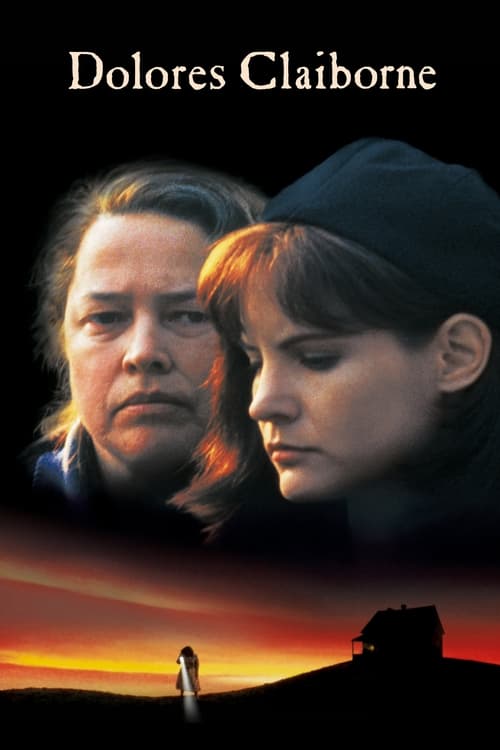
The Eclipse of TruthWhen audiences think of Stephen King adaptations, the mind instinctively drifts toward the supernatural: telekinetic prom queens, ancient cosmic clowns, or haunted hotels. However, the true terror in *Dolores Claiborne* (1995) is entirely domestic. There are no ghosts in the dilapidated hallways of the Donovan house, only the suffocating dust of bad memories. Directed by Taylor Hackford, this film stands as a singular entry in the King canon—a psychological melodrama that trades jump scares for a profound, aching exploration of generational trauma and the silent pacts women make to survive.

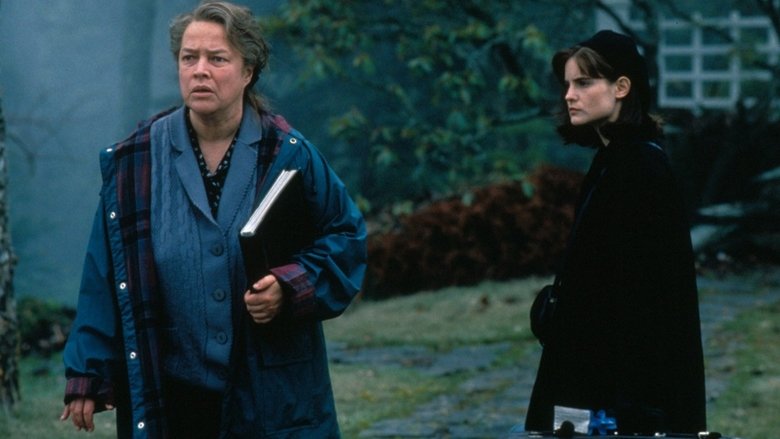
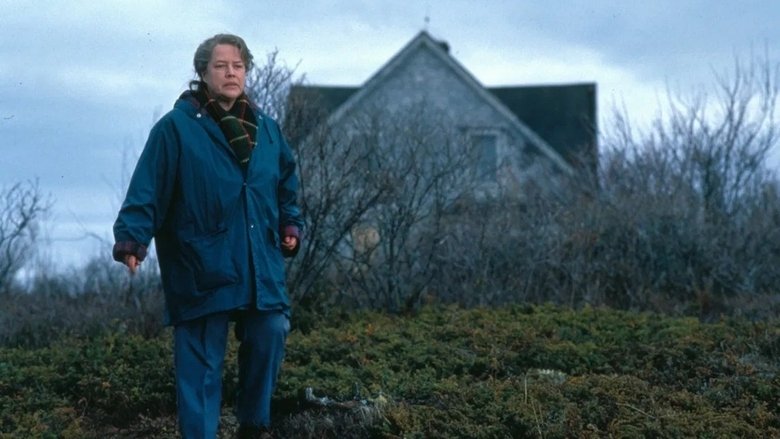
Visually, Hackford constructs the film around a stark duality that serves as the narrative’s heartbeat. Working with cinematographer Gabriel Beristain, the director delineates time through a rigorous color scheme. The present day is rendered in a desaturated, icy blue—a visual representation of the emotional permafrost that has settled over Dolores (Kathy Bates) and her estranged daughter, Selena (Jennifer Jason Leigh). In contrast, the flashbacks are shot in vivid, golden Fuji film stock, bathing the past in a deceptive warmth. This aesthetic choice is brilliant; it suggests that while the past was the site of the horror, it was also the last time these characters felt truly alive, before the "accident" froze their souls.
At the center of this storm is Kathy Bates. Coming five years after her Oscar-winning turn in *Misery*, Bates offers a performance here that is arguably superior in its nuance. Where *Misery’s* Annie Wilkes was a caricature of obsession, Dolores Claiborne is a monument to endurance. Bates plays her not as a victim, but as a calcified pragmatist. Her face is a landscape of repressed rage and fierce, protective love. The film asks us to look past her abrasive, granite-hard exterior to find the desperate mother beneath. She is matched by David Strathairn’s Joe St. George, who delivers one of cinema’s most terrifying portrayals of domestic abuse. Strathairn doesn’t play Joe as a cartoon monster, but as a pathetic, small man whose violence is as casual as it is inevitable, making the threat he poses feel suffocatingly real.
The film’s central metaphor—the total solar eclipse—is more than just a plot device; it is a thematic crescendo. The eclipse represents a suspension of the moral order, a brief moment of darkness where the unthinkable becomes necessary. Hackford stages this sequence with operatic intensity, juxtaposing the celestial event with the earthly crime. It is in this shadow that the film’s most famous line resonates with chilling clarity: "Sometimes being a bitch is all a woman has to hang onto." This isn't a celebration of cruelty, but a grim acknowledgement of the armor required to survive in a world where men like Joe hold the power.
Ultimately, *Dolores Claiborne* is a story about the excavation of truth. It argues that memory is not a static record, but a volatile substance that can poison the present if left buried. The relationship between the wealthy, imperious Vera Donovan and the working-class Dolores evolves into a complex portrait of female solidarity that transcends class lines. They are bound not by friendship, but by a shared understanding of their gender's vulnerability. In a genre often cluttered with disposable shocks, this film remains a haunting, melancholic masterpiece—a reminder that the longest shadows are cast not by the moon, but by the secrets we keep from our children.