The Architect of Our Own NightmareWhen *Attack on Titan* first breached the walls of global pop culture in 2013, it arrived disguised as a survival horror blockbuster—a high-octane spectacle of giants eating people, fueled by adrenaline and jet-propelled grappling hooks. Yet, to view this sprawling saga merely as an action series is to mistake the Trojan Horse for the soldiers inside. Over a decade-long run, what began as a story of black-and-white morality evolved into a dense, terrifying treatise on the cyclical nature of hatred, fascism, and the paralyzing cost of freedom. It is not just an anime; it is a generational mirror reflecting our own geopolitical anxieties.

Visually, the series is a tale of two studios, each bringing a distinct texture to the narrative's evolution. The early seasons, animated by Wit Studio, are defined by thick, bold lines and a saturated vibrancy that makes the horror pop with operatic intensity. The ODM gear sequences—where characters zip through forests and cityscapes—are technical marvels of kinetic energy, capturing the desperate, vertiginous thrill of flight. However, the shift to studio MAPPA for the final season marked a crucial tonal pivot. The animation became grittier, hazier, and more grounded in a suffocating realism. This visual decay perfectly mirrors the story’s descent from a clear-cut "humanity vs. monsters" narrative into a murky, morally gray war drama where the "monsters" are indistinguishable from the heroes.
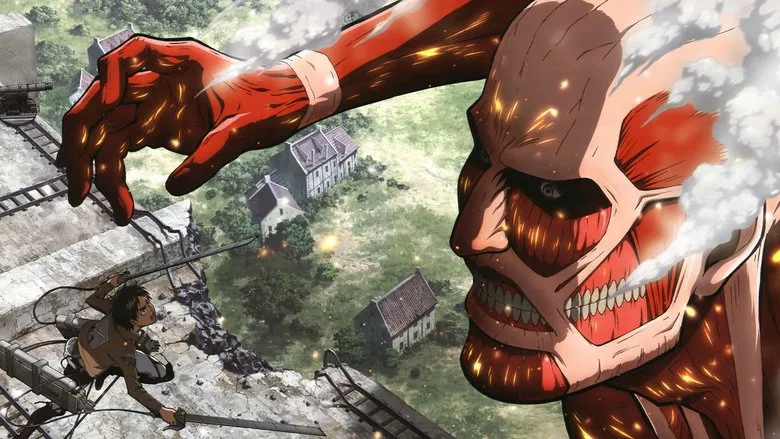
At the heart of this tragedy is Eren Yeager, one of modern fiction’s most complex protagonists. He begins as a shonen archetype—the loud, determined boy who swears to kill every last enemy. But the brilliance of the series lies in how it weaponizes this trope. As the scope of the world expands, Eren does not mature into a benevolent savior; he calcifies into a radicalized extremist. The series dares to ask a terrifying question: What happens when a victim’s desire for freedom demands the annihilation of everyone else? The "Basement Reveal" in Season 3 remains the narrative fulcrum, shattering the show’s premise and recontextualizing every prior sacrifice not as a fight for survival, but as a skirmish in an ancient, racialized geopolitical feud.

Ultimately, *Attack on Titan* leaves us with no easy answers. It systematically dismantles the glorification of war, showing that the cycle of violence is not broken by victory, but perpetuated by memory and trauma. While the finale has sparked fierce debate regarding character motivations and pacing, the sheer ambition of the journey is undeniable. It forces the audience to be complicit in the horror, challenging us to look at the "enemy" across the ocean and see ourselves. It is a masterpiece not because it is perfect, but because it is uncomfortably human.