✦ AI-generated review
The Half-Life of the American Dream
If the end of the world comes, *Fallout* suggests, it will likely be sponsored by a corporation, marketed with a jingle, and met with a polite, terrifyingly cheerful "Okey-dokey."
In the pantheon of post-apocalyptic media, we are accustomed to the grey, dour misery of *The Road* or the overgrown, fungal melancholy of *The Last of Us*. But Jonathan Nolan and Lisa Joy’s adaptation of the legendary video game franchise offers something far more disquieting: a Technicolor apocalypse. This is a series that understands that the tragedy of human extinction is best viewed not through tears, but through the cracked lens of a 1950s television set. It is a satire of American exceptionalism so potent it glows like radium.
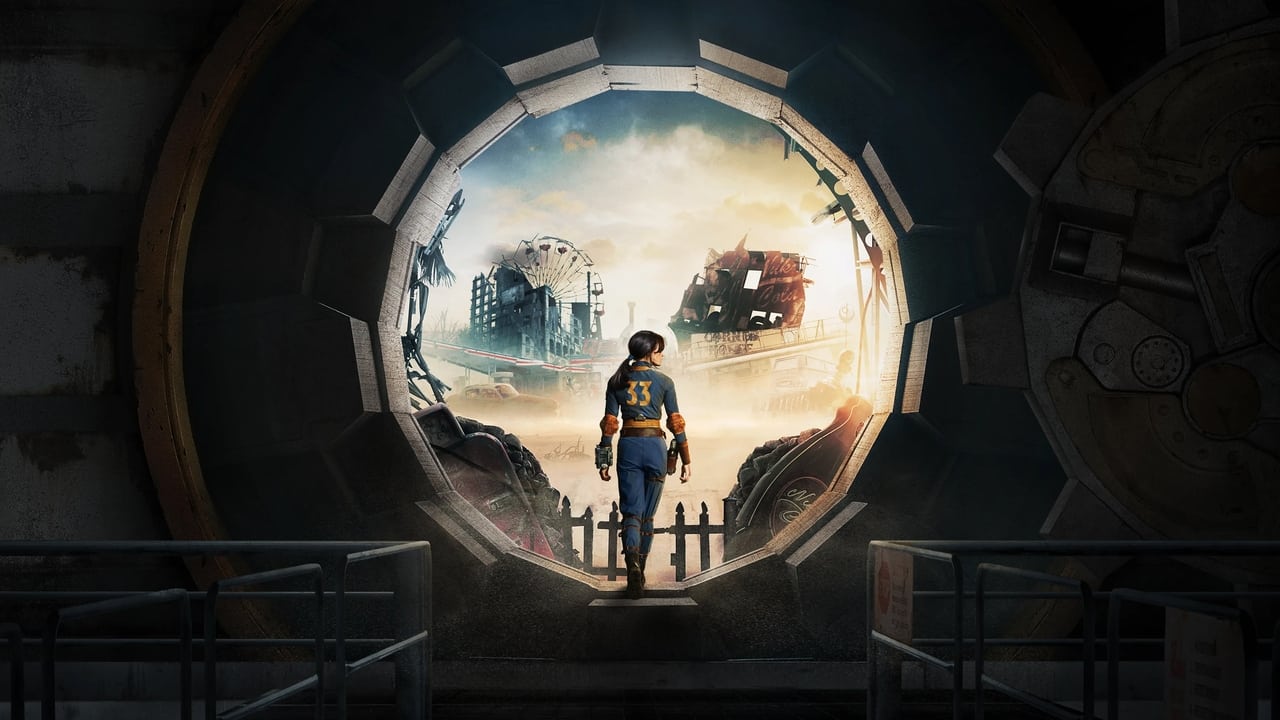
The series, led by showrunners Geneva Robertson-Dworet and Graham Wagner, does not merely adapt a video game; it translates a feeling. That feeling is the cognitive dissonance of "retro-futurism"—a world where the aesthetics of Eisenhower-era optimism (chrome fins, nuclear families, vacuum tubes) persisted until the bombs fell in 2077. The visual language here is suffocatingly specific. When we are inside Vault 33, the underground bunker where humanity’s "best and brightest" wait out the radiation, the production design is aggressively pleasant. It is a sterile, corn-fed purgatory where politeness is the ultimate survival metric.
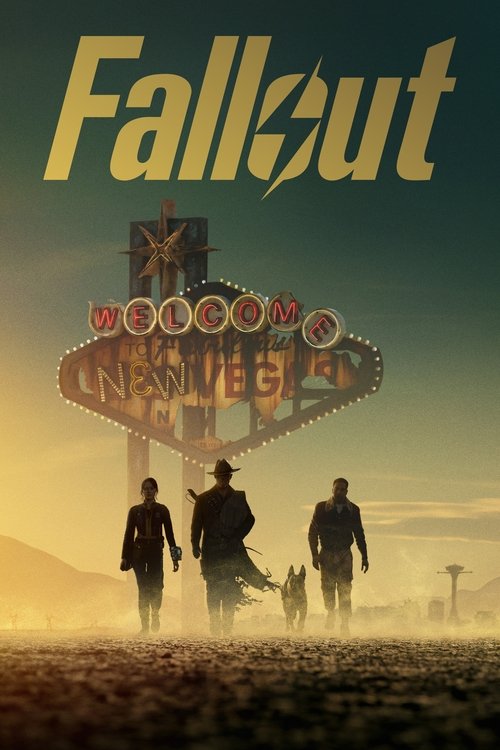
This visual perfection makes the inevitable surface world all the more jarring. When the protagonist, Lucy MacLean (a wide-eyed Ella Purnell), steps out of the vault, she is not just entering a wasteland; she is walking into the graveyard of her ancestors' ideology. The Director (Nolan helmed the first three episodes) captures the Wasteland not as a generic desert, but as a junkyard of broken promises. The "Raygun Gothic" architecture of the past stands as a rusted monument to a future that never happened.
The narrative spine of the series is the collision between Lucy and The Ghoul (Walton Goggins). Lucy is the embodiment of the Vault: naive, capable, and terrifyingly well-adjusted. She treats the apocalypse like a civic dispute that can be solved with a firm handshake. Purnell delivers a performance of tragic hilarity, her catchphrase "Okey-dokey" becoming a mantra of sanity in an insane world.
But it is Walton Goggins who provides the show’s bruised, beating heart. As The Ghoul, a bounty hunter mutated by centuries of radiation, Goggins is a walking history book of the fallen world. He is not merely a "cool" gunslinger; he is the rotting corpse of the American cowboy myth. Through flashbacks, we see him as Cooper Howard, a pre-war Hollywood star selling the very apocalypse he is now forced to endure. Goggins plays the duality with a master’s touch—the charmer who sold his soul to Vault-Tec, and the monster who has to live with the receipt.
The brilliance of *Fallout* lies in its rejection of the binary between "civilization" and "savagery." The show posits that the Vault dwellers—the so-called saviors of humanity—are arguably more monstrous than the surface raiders. The Vaults are not lifeboats; they are petri dishes for a warped social experiment, managed by a middle-management class that views the end of the world as a quarterly loss to be mitigated.
By the time the season reaches its violent, revelatory conclusion, the show has shed its video game trappings to become a searing critique of legacy. It asks a fundamental question: Do we deserve to restart the world if we are just going to build the same hierarchies that destroyed it the first time? *Fallout* is a vibrant, violent, and surprisingly profound meditation on the lies we tell ourselves to survive. It smiles at the mushroom cloud, not because it’s funny, but because the alternative is to scream.