The God of StillnessIn the modern pantheon of battle anime, movement is usually the currency of the realm. We measure the worth of a shonen epic by the fluidity of its sakuga, the kinetic energy of its camera work, and the sheer frame count of its violence. *Record of Ragnarok*, the 2021 adaptation of the manga by Shinya Umemura and Takumi Fukui, arrived on Netflix with a proposition that seemed to defy this fundamental law. Directed by Koichi Hatsumi, it is a series that attempts to capture the grandeur of the divine not through motion, but through the weight of the tableau. It is a controversial experiment in "moving manga" that asks the audience to read between the frames, finding the emotional truth in the stillness of a clenched fist rather than the blur of its impact.

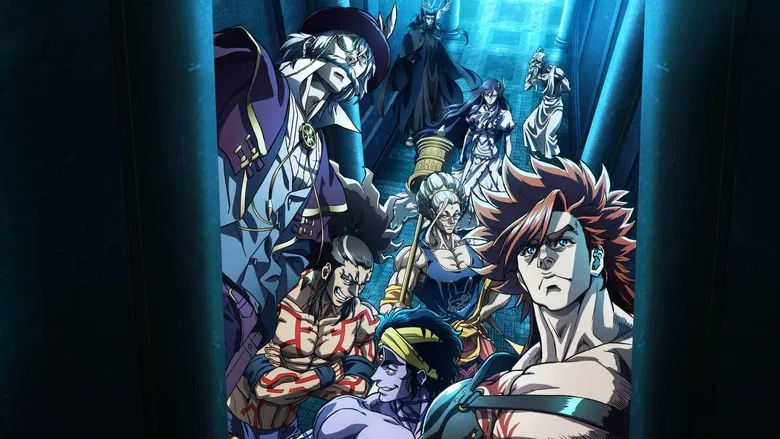
The premise is pure, unadulterated pulp mythmaking: the Gods, bored and disappointed, vote to extinguish humanity. Brunhilde, a Valkyrie with a chip on her shoulder, invokes an obscure clause to grant mankind one final trial—Ragnarok. It is a tournament arc to end all tournament arcs, pitting thirteen historical figures against thirteen deities. The narrative structure is painfully simple, a series of 1-on-1 boss battles stripped of the usual adventure trappings. But where one might expect a frenzy of divine violence, Hatsumi and studio Graphinica deliver something stranger. The visual language is often less "animation" and more "illustration with sliding layers." The criticism leveled at the show—that it resembles a glorified PowerPoint presentation—is not entirely unfair, but it misses the deliberate aesthetic choice at play. The series treats every clash like a Renaissance painting of a martyrdom; it is obsessed with the pose, the flex of a muscle, and the grotesque beauty of the facial contortion.
This static approach, while frustrating to those seeking the fluid choreography of *Jujutsu Kaisen*, forces the viewer to focus on the melodrama of the spirit. The battles are ideological debates screamed through knuckles. When Lu Bu, the strongest warrior of the Three Kingdoms, faces Thor, the Norse god of thunder, the lack of fluid motion shifts the burden of storytelling to the voice acting and the sheer scale of the character designs. The screen fills with speed lines and impact frames that hang in the air, allowing us to meditate on the concept of "strength" as a burden. It is an aesthetic of heaviness, where the gods feel physically dense, their presence suffocating the frame.
However, the series transcends its technical limitations in its second bout: the confrontation between Zeus, the Godfather of the Cosmos, and Adam, the Father of Humanity. This is the emotional anchor of the first season and the moment where the show’s philosophy clicks. Adam does not fight for glory, hatred, or survival instinct. When asked why he fights, his response is disarmingly simple: "Is there any man who needs a reason to protect his own children?"
In this sequence, the animation’s rigidity strangely amplifies the tension. We watch Adam’s "Eyes of the Lord"—an ability that copies divine techniques—strain against the overwhelming power of Zeus. The climax of their duel, a flurry of punches thrown in a void of blinding white speed, is less about choreography and more about the endurance of the human will. The image of Adam, continuing to swing even after his biological functions have ceased, is a haunting monument to paternal love. It is a moment of profound humanism amidst a cynically violent premise, proving that even a slideshow can break your heart if the static image is powerful enough.
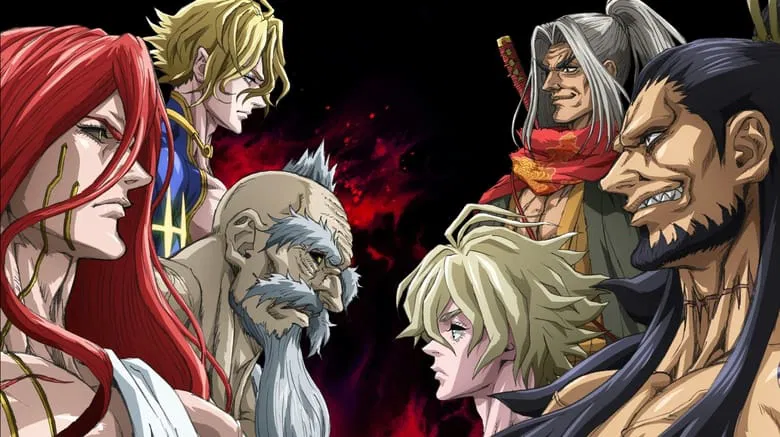
*Record of Ragnarok* is ultimately a flawed artifact, a series that crumbles under its own ambition to make the static image feel kinetic. It lacks the technical wizardry to stand alongside the genre's giants, and its pacing is often hampered by excessive exposition from the sidelines (a Greek chorus of gods explaining every punch). Yet, to dismiss it entirely is to ignore its peculiar charm. It is a brutal, operatic celebration of human defiance. It posits that while we may be mortal, fragile, and technically inferior to the divine, our capacity to endure—to stand still and take the hit—is what makes us worthy of the stage. It is not a masterpiece of animation, but it is a fascinating, muscular piece of pulp theater.