✦ AI-generated review
The Unbearable Lightness of Billions
In the current cinematic climate, the "Eat the Rich" genre has become a crowded banquet. From the Shakespearean venom of *Succession* to the operatic violence of *The Menu*, modern audiences seem insatiable in their desire to watch the ultra-wealthy suffer for their sins. Yet, *Loot* (2022), created by Alan Yang and Matt Hubbard, arrives at this table with a different offering entirely: a dessert wine rather than a Molotov cocktail. It is a curious, sometimes conflicted artifact—a show that attempts to satirize the grotesquerie of extreme wealth while simultaneously wrapping its audience in the warm, fuzzy blanket of a workplace sitcom.
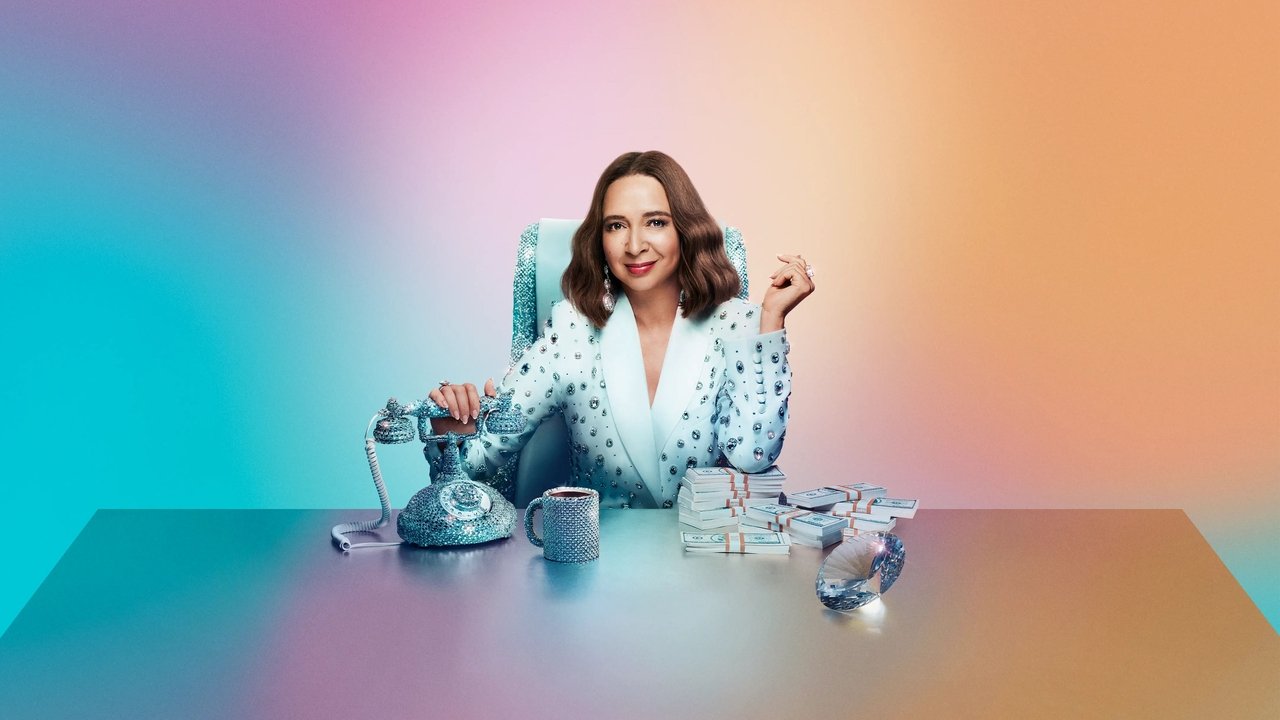
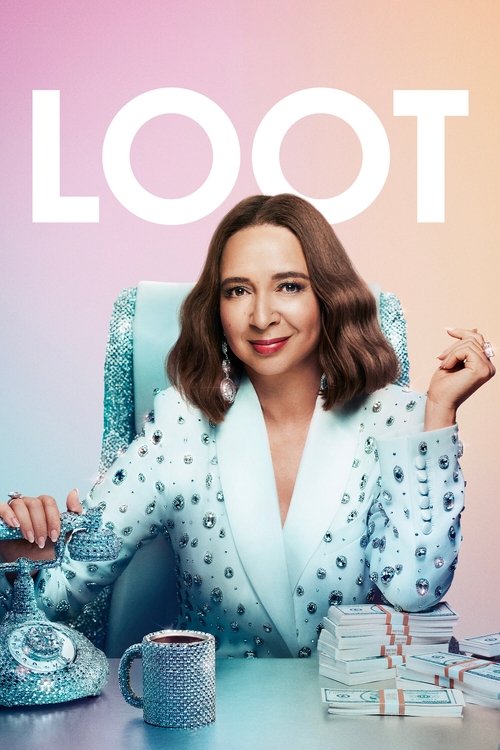
The premise is ripped from the headlines of Bezos and Gates, though filtered through a kaleidoscope of high-camp optimism. Molly Novak (Maya Rudolph), cast aside by her tech-magnate husband, finds herself with an $87 billion divorce settlement and a spiritual void that no amount of private jet travel can fill. Her solution is to descend from her ivory tower to the "ground floor"—which, in this universe, is the sleek, well-appointed office of the charitable foundation she forgot she owned.
Visually, the series functions as a piece of architectural confection. The showrunners utilize the visual language of "wealth porn" not just as a setting, but as a narrative obstacle. Molly’s world is shot in hyper-saturated, sterile brightness; her mansion (filmed at the infamous "The One" estate in Bel Air) is less a home than a museum of isolation. In one early, defining image, Molly weeps in her personal "candy room"—a space dedicated entirely to sugar-coated excess. It is a striking visual metaphor for the character herself: colorful, expensive, and fundamentally unnourishing. The camera lingers on these spaces to emphasize the suffocation of having *too much*, creating a comedic tension between Molly’s desire for human connection and the literal square footage that separates her from everyone else.
However, the series truly lives or dies on the specific frequency of Maya Rudolph. Rudolph is a performer of rare elasticity, capable of finding humanity in the most caricatured scenarios. Her Molly is not the villainous oligarch of typical satire; she is a woman in a state of arrested development, thawing out after a twenty-year cryosleep of privilege. The show’s "heart" lies in the friction between Molly’s genuine desire to help and her complete inability to understand the mechanics of normal life.
This dynamic is best crystallized in the widely circulated "Hot Ones" sequence. Here, stripped of her handlers and assaulted by spicy wings, Molly’s composed facade disintegrates into a primal, cursing mess. It is a moment of physical comedy that doubles as character revelation: without her billions to buffer the pain, Molly has no tolerance for the "heat" of reality.
Where *Loot* stumbles is in its reluctance to truly bite the hand that feeds the narrative. By rooting its DNA in the gentle, optimistic soil of *Parks and Recreation* (the creators' alma mater), the show often pulls its punches. It asks us to root for the billionaire’s redemption, suggesting that the remedy for systemic inequality is simply a nicer, more self-aware 1%. The friction between the sharpness of the satire and the sweetness of the ensemble comedy—particularly the found-family dynamic with the stern, principled Sofia (Michaela Jaé Rodriguez)—can sometimes feel tonal whiplash.
Ultimately, *Loot* is a series at war with its own subject matter. It wants to condemn the absurdity of hoarding wealth while delighting in the aesthetics of it. It is not the radical critique of capitalism that the era perhaps demands, but thanks to Rudolph’s transcendent warmth, it succeeds as a study of a woman trying to buy her way into a soul. It is a gilded cage, yes, but one with a very comfortable view.