✦ AI-generated review
The Entropy of Springfield
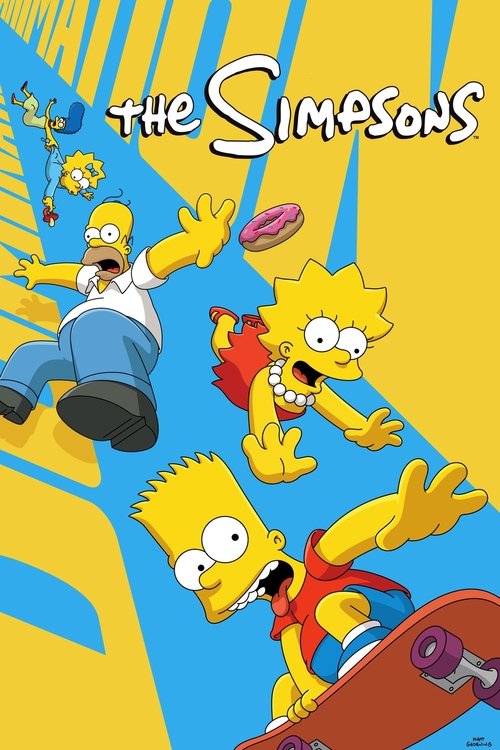
To discuss *The Simpsons* is no longer to discuss a television show, but rather a geological stratum of American culture. Since emerging from the primordial ooze of *The Tracey Ullman Show* in 1989, Matt Groening’s creation has evolved from a counter-cultural shock to the system into the very establishment it once mocked. It is a monolith of longevity that forces us to ask an uncomfortable question about art: What happens when a satire outlives the reality it was meant to critique?
Visually, the series serves as a time-lapse of the medium’s industrialization. In the celebrated "Golden Age" (roughly seasons 3 through 9), the animation possessed a kinetic, hand-drawn warmth. The lines were imperfect; the "camera" angles were ambitious, borrowing the vocabulary of cinema (referencing *Citizen Kane* or *Cape Fear* with startling fluency). There was a rubbery, frantic energy to the movement—Bart’s skateboard sequences or Homer’s physical comedy had weight and consequence. Today, the show is rendered in pristine, high-definition digital animation. The colors are brighter, the lines sharper, and the shadows more consistent, yet the result is a sterile, vector-based rigidity. The characters no longer move with the unpredictability of life; they glide like assets in a well-managed software program. This visual ossification mirrors the narrative stiffness that has come to define the modern era.
The true tragedy of *The Simpsons*, however, lies in the erosion of its human core. In its prime, the show was a miracle of empathy disguised as cynicism. The writers understood that for the satire to bite, the family had to be real. Homer Simpson was dim-witted and impulsive, yes, but he was grounded by a desperate love for his family and a fear of failure. In the legendary episode "And Maggie Makes Three," the reveal of Homer’s workplace collage—"Do it for her"—was not a punchline, but a devastating moment of blue-collar sacrifice.
Contrast this with the phenomenon critics have dubbed "Zombie Simpsons." In the show’s latter decades, the characters have been flattened into caricatures of their former selves. Homer has mutated from a flawed father into an invincible agent of chaos, immune to physical or emotional consequence ("Jerkass Homer"). The town of Springfield, once a breathing ecosystem populated by specific, sad, hilarious weirdos, has become a mere backdrop for celebrity cameos and fleeting pop-culture references. The narrative no longer emerges from the characters' internal contradictions; instead, the characters are contorted to fit whatever wacky premise the writers have concocted for the week.
Ultimately, *The Simpsons* is a victim of its own refusal to end. It remains on the air not because it has more to say, but because it is too big to fail—a global brand rather than a story. Watching a modern episode feels like visiting a childhood home that has been renovated beyond recognition: the structure is the same, the address is correct, but the ghosts of the people who made it a home have long since moved on. It stands now as a monument to its own past brilliance, a yellow ghost haunting the television landscape, forever frozen in a time that no longer exists.