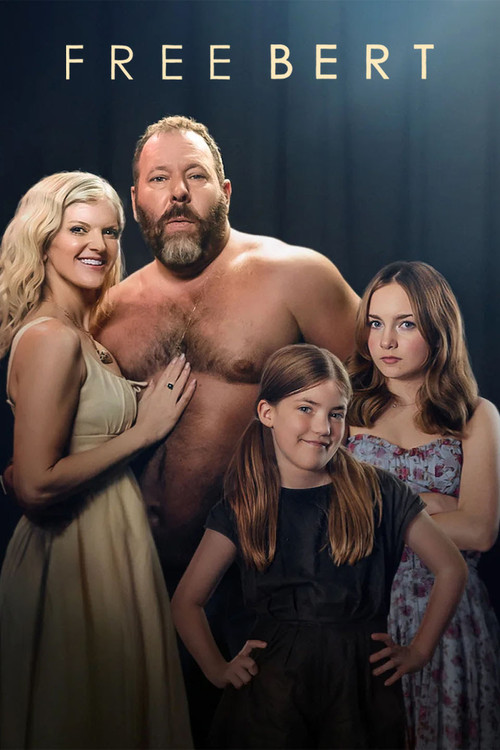
The Dionysian Dad in an Apollonian WorldComedy has historically served as the court jester’s prerogative: the ability to speak truth to power through the veil of absurdity. In *Free Bert*, Netflix’s latest scripted venture into the fictionalized life of comedian Bert Kreischer, the "court" is the manicured, beige purgatory of a Beverly Hills private school, and the jester is, predictably, shirtless. However, to dismiss this six-episode run as merely another vehicle for Kreischer’s “party animal” brand is to miss the surprising melancholy at its center. This is not just a sitcom about a loud man in a quiet library; it is a study of the friction between performative civility and raw, unfiltered humanity.
The premise is deceptively simple: Kreischer (playing a heightened version of himself) and his sharp-witted wife LeeAnn (a scene-stealing Arden Myrin) must navigate the social minefield of elite education after their daughters are accepted into a prestigious academy. But where lesser shows would rely entirely on "fish out of water" tropes, *Free Bert* digs deeper into the soil of imposter syndrome.
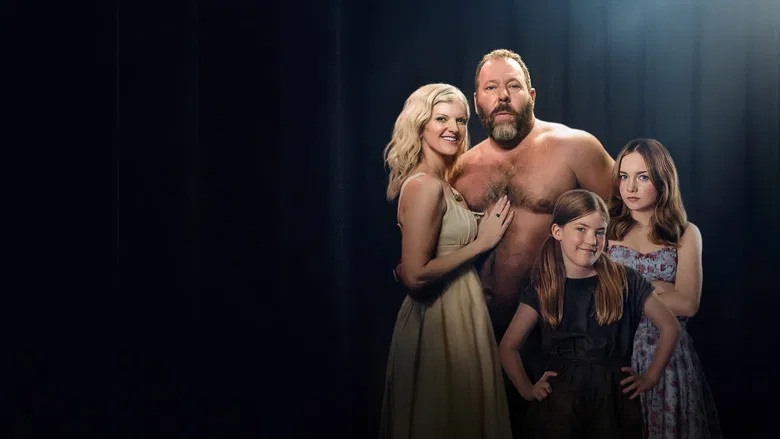
Visually, the series creates a deliberate and suffocating contrast. Directors Jarrad Paul and Andrew Mogel utilize a palette of muted earth tones and sterile whites for the school environments—a visual language of control and repression. Into this frame steps Bert, often clad in vibrant, clashing prints or nothing at all. The cinematography treats his physical presence not just as a gag, but as a disruption of order. When he drops his daughters off at school, the camera lingers on the pristine line of luxury SUVs, making Bert’s chaotic arrival feel like a splash of neon paint on a Caravaggio. The "shirt" becomes the show's central metaphor: a straitjacket of social acceptability that Bert tries, and fails, to wear.
The narrative weight, however, rests on the domestic dynamics. While the pilot leans heavily into the slapstick of Bert performing at Rob Lowe’s birthday party, the subsequent episodes settle into a rhythm of genuine parental anxiety. The show posits a terrifying question for any parent who has built a career on being "a mess": *Is my authenticity toxic to my children?*

The series finds its emotional anchor in the relationship between Bert and his eldest daughter, Georgia (Ava Ryan). Ryan brings a deadpan, digital-native cynicism that acts as the perfect foil to Kreischer’s analog loudness. The storyline involving a podcast clip going viral on TikTok is particularly sharp, dissecting how a father's attempt at humor can become a daughter's social death sentence in the algorithmic age. It’s here that the show transcends its genre trappings. We aren't just watching a comedian fail to fit in; we are watching a father realize that the very tools that built his empire—his lack of filter, his excess—are now liabilities in the one job that actually matters.
Arden Myrin’s performance deserves special mention. She avoids the "nagging wife" archetype that plagues the genre, instead playing LeeAnn as a co-conspirator who has simply learned to navigate the chaos better than her husband. She is the bridge between Bert’s id and the world’s superego.
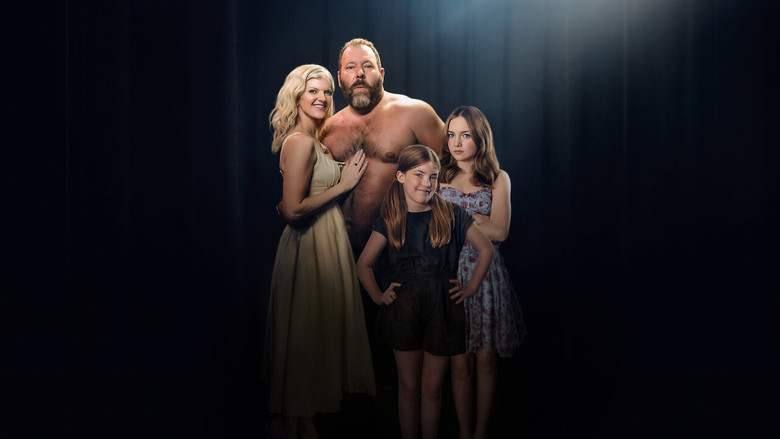
Ultimately, *Free Bert* is a defense of the messy human spirit in an increasingly sanitized world. It argues that while the polished surfaces of the elite class may look appealing, they are often devoid of life. Bert’s inability to "put on the shirt"—to conform to the silence—is not a failure, but a defiant act of living. The series may stumble occasionally in its pacing, and its reliance on shock humor can sometimes undercut its quieter moments, but it succeeds in painting a portrait of a man who is terrified that his best self is not good enough for the people he loves. It is a raucous, flawed, and surprisingly tender look at the cost of comfort.